No products in the cart.
How to Stop Your Cat from Being Bored at Home

Pet Wellness · 2026
How to Stop Your Cat from Being Bored at Home
Boredom is the most under-recognised welfare crisis for indoor cats — and it is completely preventable with the right approach.
Ask most cat owners whether their cat is happy and they will say yes — after all, the cat eats well, has a warm spot on the sofa, and is not visibly distressed. But animal welfare researchers increasingly agree that boredom is the number-one undiagnosed welfare problem for indoor cats in the United States. Your cat does not tell you it is bored; it shows you in subtler, slower ways — and by the time most owners notice, the behaviour has already become entrenched habit.
Indoor cats live dramatically different lives from their outdoor counterparts. No territory to patrol, no prey to stalk, no unpredictable weather to navigate. While that sounds comfortable, it removes the very stimuli cats evolved to need. The result is an animal whose powerful predatory brain has nothing meaningful to do — and a brain without a job invents its own problems. Scratched furniture, midnight zoomies, unexplained aggression, and compulsive grooming are rarely personality quirks; they are almost always symptoms of an under-stimulated mind. According to the ASPCA, environmental enrichment is one of the most important factors in maintaining the physical and psychological wellbeing of indoor cats.
This guide breaks down exactly what feline boredom looks like, why indoor cats are especially vulnerable, and the most effective enrichment strategies that actually produce measurable improvements in behaviour and wellbeing — regardless of how large or small your home may be.
“A cat that cannot express its natural predatory sequence — stalk, pounce, catch, kill, eat — will redirect that energy somewhere, and it will not always be where you want it.”
— Dr. Mikel Delgado, Certified Cat Behaviour Consultant & Researcher, UC Davis School of Veterinary Medicine
— Dr. Mikel Delgado, Certified Cat Behaviour Consultant & Researcher, UC Davis School of Veterinary Medicine
📋 In This Guide
- What does cat boredom actually look like?
- Why indoor cats get bored faster than outdoor cats
- The enrichment pyramid: 3 levels that cover everything
- 7 practical anti-boredom tactics for any home
- The role of rest — balancing enrichment with recovery
- Product picks: our top enrichment tools
- Frequently asked questions
What Does Cat Boredom Actually Look Like?
The tricky thing about feline boredom is that cats are masters of conservation. Unlike dogs, who will bark, whine, or destroy furniture in obvious distress, cats channel their frustration into patterns that look like personality quirks rather than welfare signals. Here are the five most telling signs — and the mechanism driving each one.
Overgrooming
If your cat licks the same patch of fur to the point of thinning or baldness — particularly on the belly, inner legs, or base of the tail — this is called psychogenic alopecia. Once a vet has ruled out skin conditions or parasites, the most common culprit is chronic under-stimulation. The repetitive action of grooming releases endorphins, and a bored cat self-medicates with its own tongue. It is a coping mechanism, not a hygiene behaviour.
Aggression Spikes
Random biting, midnight zoomies followed by ambush attacks on your ankles, sudden swatting at other pets — these are classic manifestations of predatory energy with nowhere legitimate to go. The cat is not being aggressive in the traditional sense; it is completing a hunting sequence that never received a proper outlet during the day. Redirected aggression driven by boredom is among the top reasons cats are surrendered to shelters across the US each year.
Excessive Vocalisation
Yowling, persistent meowing at walls or windows, or vocalising at odd hours is often labelled as the cat being demanding. In many cases, it is a stress response to monotony. Cats in enriched environments vocalise for specific, identifiable reasons — hunger, illness, mating. Cats in barren environments vocalise because they have run out of anything else to do with their energy. The sound itself is not the problem; the boredom driving it is.
Destructive Scratching
Scratching is normal and necessary cat behaviour — it conditions claws, stretches back muscles, and deposits scent markers. But when scratching becomes frantic, escalating, or focused exclusively on furniture rather than designated surfaces, the cat is overwhelmingly likely to be self-soothing. Providing appropriate scratching posts helps, but addressing the underlying boredom is what actually stops the escalation from continuing.
Overeating
A bored cat standing in front of its food bowl at 10 pm may not actually be hungry — it is seeking the only reliable source of environmental change in its day. Food is one of very few things in an indoor cat’s life that predictably shifts from one state to another. Free-feeding setups actively encourage this habit, contributing to the obesity epidemic affecting an estimated 60% of US pet cats. Puzzle feeders address both the boredom and the overeating simultaneously by transforming a passive behaviour into active cognitive work.
Why Indoor Cats Get Bored Faster Than Outdoor Cats
Outdoor cats spend an average of three to five hours per day engaged in active behaviours — hunting, territory patrol, investigating novel stimuli, navigating environmental hazards, and opportunistic social encounters with other animals. Even in low-prey suburban environments, the outdoor world changes constantly: new scents on the wind, insects crossing the garden path, the neighbour’s dog on the other side of the fence, the garbage truck on Thursday morning.
Indoor cats in the average American home occupy a static environment. The furniture does not move. The smells do not change. Nothing genuinely new appears. The same humans arrive and depart on the same schedule. From an evolutionary standpoint, this is profoundly unnatural for an apex micro-predator whose entire nervous system was built for environmental complexity and unpredictability.
It is worth being clear: indoor life is dramatically safer. Indoor cats live an average of 12 to 18 years compared with 2 to 5 years for outdoor cats in many US urban environments, due to traffic, predators, disease, and human cruelty. But safety and stimulation are two completely separate problems, and providing one does not automatically address the other. The goal is to design an indoor environment that meets a cat’s genuine cognitive and physical needs without the associated outdoor risks — and that requires deliberate effort, not just good intentions.

The Enrichment Pyramid: 3 Levels That Cover Everything
Not all enrichment is equal, and throwing random toys at a bored cat rarely solves the underlying problem. Animal behaviourists structure feline enrichment across three interdependent levels, each building on the last. Addressing all three is what separates genuinely effective cat welfare from the rotating cycle of expensive toys that get sniffed once and ignored.
Level 1 — Environmental Enrichment: The physical spaces your cat can access, inhabit, and interact with. This means vertical territory such as cat trees and wall-mounted shelves at staggered heights, window perches with clear outdoor views, multiple designated scratching surfaces, and well-placed hiding spots. Environmental enrichment is the foundation; without it, higher-level interventions are less effective because the cat lacks the physical infrastructure for meaningful exploration. A cat that cannot get off the floor is a cat with limited options.
Level 2 — Social Enrichment: Interaction quality matters enormously more than duration. Twenty minutes of focused interactive play with a wand toy provides more genuine psychological benefit than eight hours of passive cohabitation in the same room. For multi-cat households, social enrichment also requires actively managing resource competition — enough litter trays, enough separate feeding stations, enough elevated territory so cats do not experience the chronic low-level stress of competition over limited resources.
Level 3 — Cognitive Enrichment: The brain needs problems to solve. Puzzle feeders, treat-dispensing toys, a rotating toy selection that maintains novelty, basic clicker training sessions, and scent enrichment all engage a cat’s problem-solving circuitry in ways that passive play cannot. Even ten minutes of genuinely novel cognitive input per day can meaningfully reduce cortisol levels in cats that have been chronically under-stimulated. The brain rewards itself for figuring things out — and that reward is what bored cats are constantly missing.
58%
of indoor cats show at least two clear behavioural signs of chronic under-stimulation
of indoor cats show at least two clear behavioural signs of chronic under-stimulation
16 hrs
average daily sleep — but 5–6 of those hours should involve active stimulation windows
average daily sleep — but 5–6 of those hours should involve active stimulation windows
40%
reduction in stress-related cortisol markers seen in cats given consistent enrichment schedules
reduction in stress-related cortisol markers seen in cats given consistent enrichment schedules
7 Practical Anti-Boredom Tactics for Any Home
The strategies below are ranked by cost-effectiveness and ease of implementation. You do not need to deploy all seven immediately — start with two or three, build consistency, and layer in the rest over the following weeks.
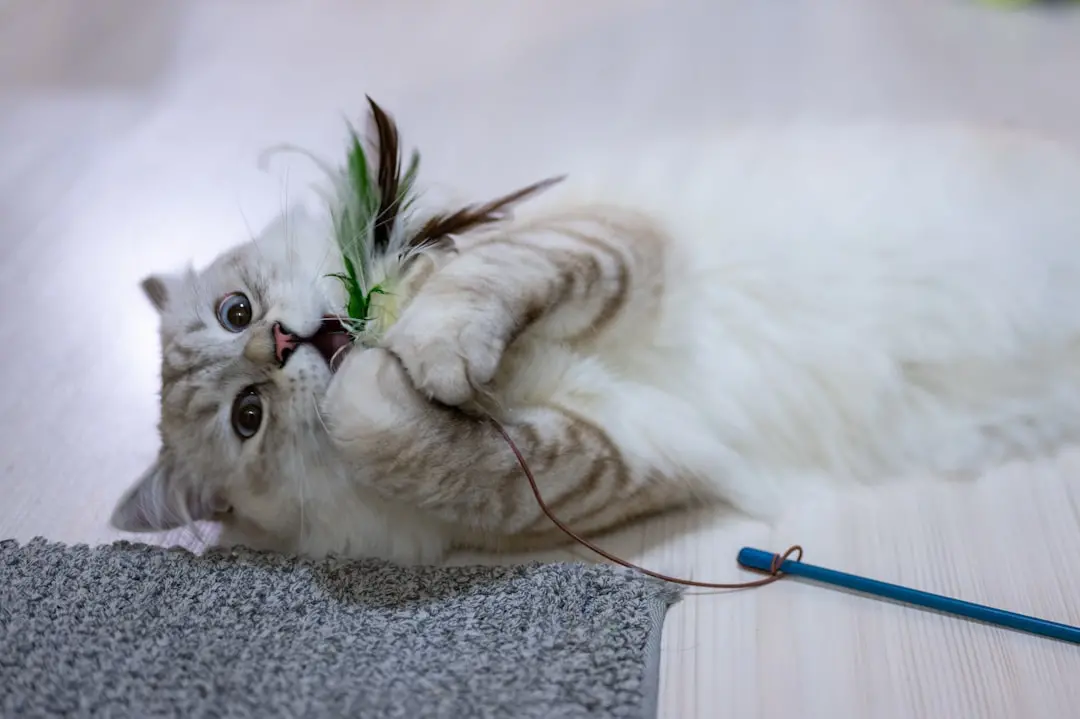
1. Introduce a play schedule, not just toys. Set two daily interactive play sessions of 10 to 15 minutes — ideally at dusk and dawn when cats are naturally most active. Use a wand toy or feather teaser that mimics genuine prey movement: erratic, unpredictable, occasionally “hiding” under a blanket or behind a chair. End every session with a small treat to complete the psychological “catch and eat” cycle. This completion is essential for full satisfaction — a hunt that ends without a kill leaves the predatory loop open.
2. Rotate toys on a weekly basis. A toy left on the floor for three weeks is furniture, not enrichment. Novelty is the mechanism by which toys provide stimulation, and novelty fades fast. Keep a rotation of 8 to 10 toys and cycle them in and out weekly. Storing inactive toys in a sealed bag with dried catnip or valerian root between rotations effectively refreshes their appeal when they reappear.
3. Create vertical territory. Cats are instinctive climbers and feel psychologically safest with elevation. A cat tree near a window, wall-mounted shelves at staggered heights, or cleared bookshelf space gives your cat a way to survey territory, escape perceived threats, and engage with the outdoor environment visually. In multi-cat households, multiple elevation points are essential — territorial competition over a single high spot creates stress, not comfort.
4. Move to puzzle feeders. Converting all meals — or at minimum 50% of daily food intake — to puzzle feeders extends eating from 30 passive seconds to 10 or 20 minutes of active problem-solving. This engages cognitive and physical enrichment simultaneously, reduces eating speed (which benefits digestion), and provides a daily activity that scales in complexity as the cat improves. Start with beginner-level puzzles and advance gradually.
5. Install a window bird feeder. Positioned within clear sightline of your cat’s favourite perch, a bird or squirrel feeder provides hours of unpredictable, constantly changing visual stimulation at virtually zero ongoing cost. Wildlife movement activates the same attentional circuits as live prey, and the unpredictability means the stimulus never becomes static. This is arguably the highest return-on-investment enrichment available to indoor cat owners.
6. Start clicker training. Most owners never think of training as enrichment, but ten minutes of positive reinforcement training — teaching a cat to sit, touch a target, jump between platforms, or retrieve a small object — is one of the most cognitively demanding and psychologically beneficial activities you can provide. It requires focused attention, problem-solving, and collaboration, and it significantly strengthens the human-animal bond in ways that passive cohabitation simply cannot replicate.
7. Introduce scent enrichment. Cats experience the world primarily through olfaction. Rotating novel scents — silver vine, catnip, valerian, rabbit fur, or even dried herbs — gives a cat something genuinely new to investigate and process. Placing a worn garment in a new location, or introducing an unfamiliar paper bag from outside, can activate scent-based exploratory behaviour that occupies a curious cat for a surprisingly long time with no cost at all.
The Role of Rest — Balance Enrichment with Recovery
There is a nuance that often gets overlooked in the enrichment conversation: cats need quality rest as much as they need stimulation. An over-stimulated cat that has nowhere to fully decompress will show anxiety rather than contentment — and the signs of anxiety in cats look remarkably similar to the signs of boredom: restlessness, irritability, vocalisation, and disrupted sleep. Adding enrichment without adding rest infrastructure can actually make things worse.
The enrichment pyramid works best when it operates alongside dedicated rest spaces. A cat that can retreat to a warm, enclosed sleeping environment — elevated off the floor, away from household foot traffic, consistently available — will engage more enthusiastically with enrichment activities during active windows, and recover more completely between them. Deep sleep is neurologically restorative; cats that sleep badly are cognitively impaired in ways that reduce the effectiveness of any enrichment you provide.
The CozyNest All-Season Cat Bed addresses this directly. Its donut tunnel design replicates the enclosed, den-like sleeping spots cats instinctively select in the wild, while the self-warming felt retains body heat without any electrical components to malfunction. At $12.99, it is one of the highest-value investments you can make for a cat’s long-term wellbeing — not because it entertains, but because genuine rest is what makes every other enrichment strategy work effectively.
Product Picks: Our Top Enrichment Tools
These two products address the two most common enrichment gaps in the average indoor cat setup: the need for active, engaging play, and the need for a restorative rest space that supports the whole daily cycle.
1
Best for Active Play
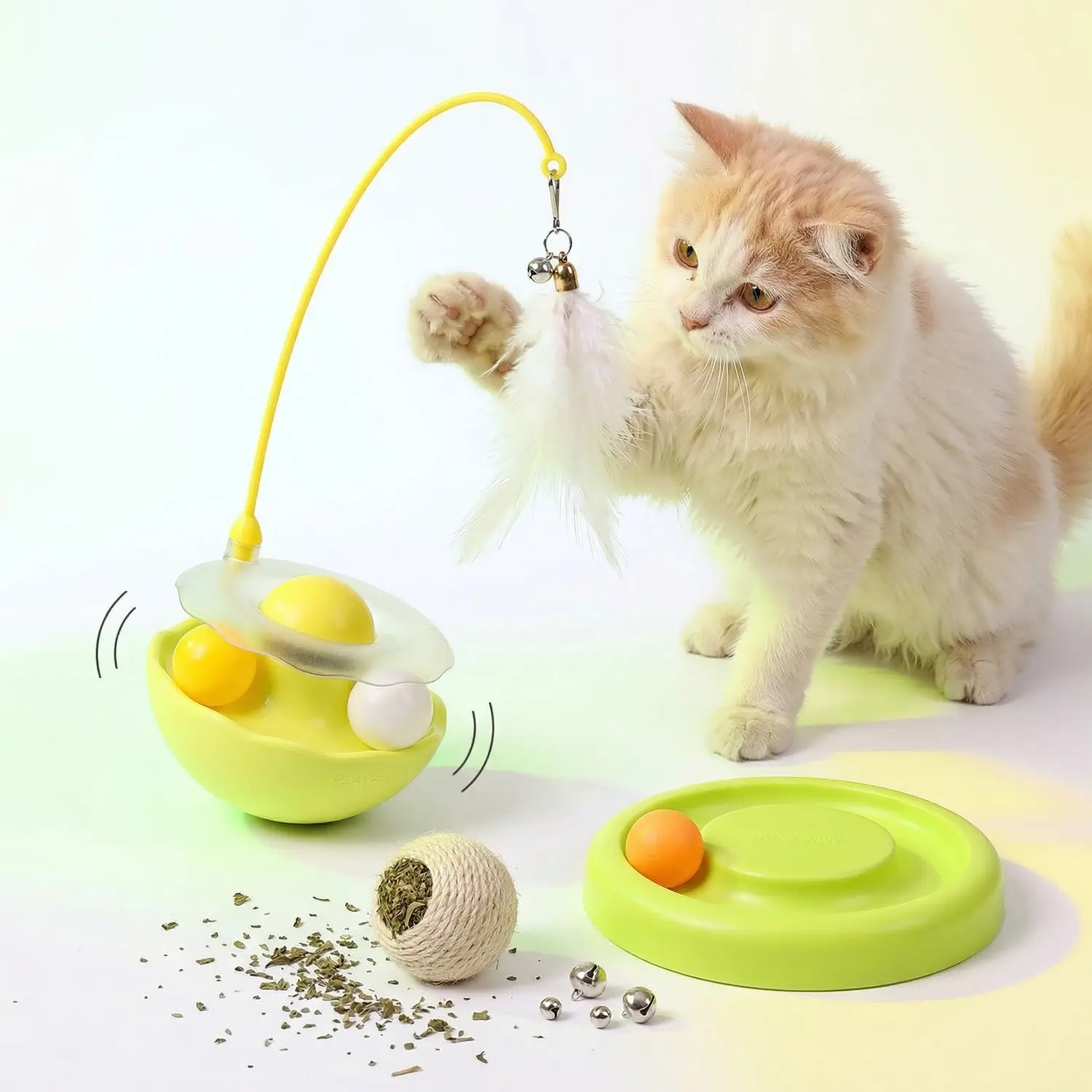
PlayPaw Tumbler Cat Toy Set
$3.99
A self-righting wand, catnip ball, and spinning turntable in a single set — covering the complete hunt sequence that indoor cats need for genuine psychological satisfaction. The self-righting mechanism keeps the toy active even without your direct involvement, meaningfully extending solo play sessions. The catnip ball adds scent stimulation that engages a different enrichment channel simultaneously. At under $4, this is the highest-value enrichment purchase available for indoor cats.
2
Best for Quality Rest
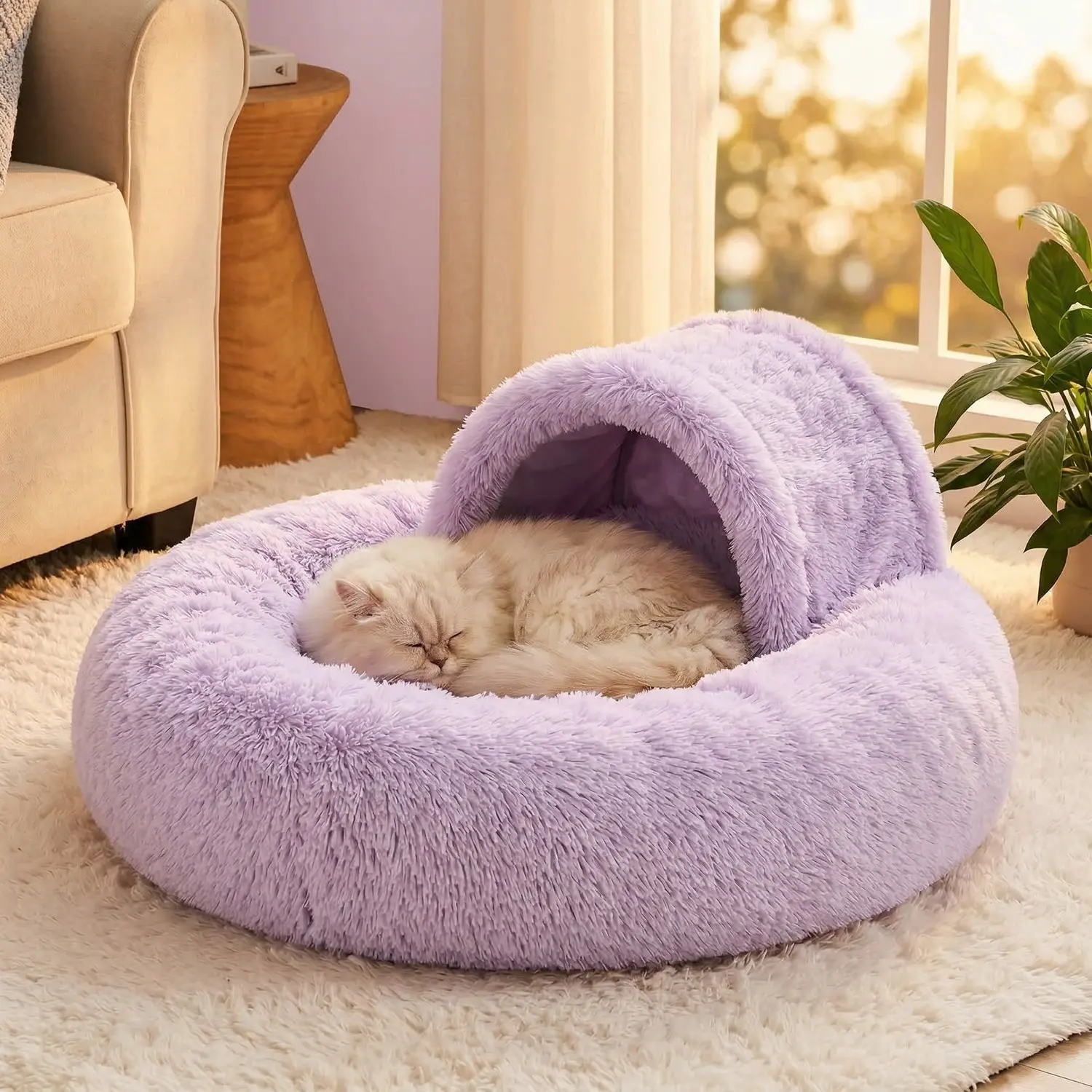
CozyNest All-Season Cat Bed
$12.99
The donut tunnel design replicates the enclosed dens cats instinctively choose for deep, restorative sleep. Self-warming felt means no electrical components to fail, no cords to manage, and a surface that stays warm throughout the night from body heat alone. The design works year-round without modification. A cat that sleeps deeply and completely is a cat that plays more enthusiastically — this bed is the recovery infrastructure your enrichment routine depends on.
Frequently Asked Questions
How do I tell if my cat is bored versus just naturally calm and laid-back?
Genuinely calm cats are relaxed and content during downtime — they seek out sunbeams, stretch with satisfaction, and engage readily when offered play. Bored cats look flat: they stop initiating interaction, they follow you from room to room without settling anywhere, they stare at walls or blank surfaces, or they exhibit repetitive self-directed behaviours like overgrooming. The clearest diagnostic test is offering a wand toy or food puzzle during an active window. A calm cat will engage with enthusiasm. A bored cat often shows initial interest but disengages quickly because the reward pathways have been chronically under-activated and take time to rebuild.
My cat ignores every toy I buy within 24 hours. What am I doing wrong?
Most likely the toy is being left out permanently so novelty fades immediately, it does not convincingly mimic prey movement, or it is being offered at the wrong time of day. Try wand toys exclusively during dusk and dawn — the natural hunting windows — and move the toy in an erratic, prey-like pattern: dart forward, freeze for two seconds, dart sideways, hide under a blanket edge, peek out. Cats need to feel they are hunting something actively trying to escape. Also rotate toys weekly and store inactive ones in a sealed bag with dried catnip between sessions to restore their appeal.
Will getting a second cat solve my cat’s boredom problem?
A second cat can help, but it is not a guaranteed solution and comes with substantial caveats. Cats are fundamentally semi-solitary animals, and many adult cats — especially those who have been solo pets for several years — find a new cat significantly more stressful than stimulating. Introductions must follow a multi-week protocol, and resource management becomes considerably more complex. For many cats, high-quality daily human interaction and a well-designed enrichment environment is both safer and more effective than forced feline companionship. If you are seriously considering a companion, consult a certified cat behaviour consultant first.
How long before I see real results from enrichment changes?
Behavioural improvements from consistent enrichment typically become noticeable within two to four weeks. Some changes — increased playfulness, reduced hiding, more frequent solicitation of interaction — appear within the first few days. Others — reduced overgrooming, improved sleep quality, less nocturnal vocalisation — reflect deeper neurological recalibration and take longer to manifest. Consistency matters far more than intensity: two 15-minute play sessions every single day outperforms an hour of weekend playtime followed by five days of passive neglect. Commit to any new enrichment strategy for a minimum of four weeks before assessing its impact.
✅ The Verdict
Cat boredom is a genuine welfare issue, not a quirky personality trait, and it is entirely preventable. The good news is that even modest, consistent changes to your cat’s daily environment — a play schedule, rotating toys, a puzzle feeder, a proper rest space — produce real, measurable improvements in behaviour and wellbeing within weeks. You do not need a large home, an expensive setup, or unlimited time. You need intentional design of the space and interactions you already have. Start with one level of the enrichment pyramid this week, build from there, and watch what a difference it makes for an animal that depends entirely on you to meet its mental needs.
Ready to Enrich Your Cat’s World?
Explore our full range of cat toys, beds, and wellness products — all chosen for genuine enrichment value, not just cute packaging.


About author