No products in the cart.
GlowLift Pro EMS Facial Device Review: I Used It Every Day for 4 Weeks
✦ Product Review
GlowLift Pro EMS Facial Device Review: I Used It Every Day for 4 Weeks
A first-person, science-informed diary of what really happened when I committed to daily EMS microcurrent sessions at home — lift, tone, and the whole honest story.
Let me be candid with you: I have a drawer full of abandoned beauty devices. The pulsed-light wand that lived in my cabinet for two months. The jade roller I used exactly four times. The gua sha stone that became a paperweight. I say this not to confess my failures but to set the scene for why a $103.99 EMS facial device gave me genuine pause before I unboxed it.
But I had been reading about electrical muscle stimulation — the same technology physical therapists use on post-surgery patients — and I was genuinely curious whether a consumer-grade device could translate that science onto facial muscles. So I committed. Every single day for four weeks. No skipped sessions, no quiet shelf retirements. What follows is my honest, week-by-week account of using the GlowLift Pro EMS Facial Beauty Device, including what the science actually says and who this device is — and isn’t — worth the investment for.
✦ In This Review
- What EMS Actually Does to Your Facial Muscles
- Meet the GlowLift Pro: What You Get
- Week 1: The Learning Curve
- Week 2: The First Real Changes
- Week 3–4: The Results I’d Actually Photograph
- GlowLift Pro vs. Professional Facial vs. Manual Massage
- When It’s Worth $103.99 — and When It Isn’t
- How I Build My Full Routine Around It
- Frequently Asked Questions
28
Consecutive daily sessions
Consecutive daily sessions
3-in-1
EMS + Ultrasonic + Ionic
EMS + Ultrasonic + Ionic
$103
vs. $180+ per pro session
vs. $180+ per pro session
7.3%
CAGR — microcurrent market growth
CAGR — microcurrent market growth
What EMS Actually Does to Your Facial Muscles
EMS — electrical muscle stimulation — is not a wellness trend born on TikTok. It has legitimate roots in physical medicine, where low-level electrical currents have been used for decades to rehabilitate atrophied muscles after injury or surgery. The premise, when applied to the face, is elegant in its simplicity: deliver a sub-sensory electrical pulse to the muscle tissue beneath the skin, cause involuntary micro-contractions, and over time, improve both muscle tone and the skin quality above it.
According to the American Academy of Dermatology, the condition of the skin is deeply tied to the underlying support structures — including the muscles and connective tissue that give the face its architecture. When those structures weaken with age (a process that begins gradually in our late twenties), the skin above them has less scaffolding to hold onto, leading to the drooping, hollowing, and general loss of definition that no moisturizer alone can fully address.
A 2024 review on home beauty devices for facial rejuvenation published in the National Library of Medicine found that microcurrent devices — which operate on a similar principle to EMS — can temporarily stimulate muscle fibers and may support ATP (adenosine triphosphate) production, the cellular energy currency that drives skin repair. The key word is “temporarily,” which is why consistency is so non-negotiable with these devices. Skip a week and you’re back to baseline faster than you’d like.
“The face has more than 40 individual muscles — and like any muscle, they respond to regular, measured stimulation. The question is whether your device is delivering that signal effectively.”
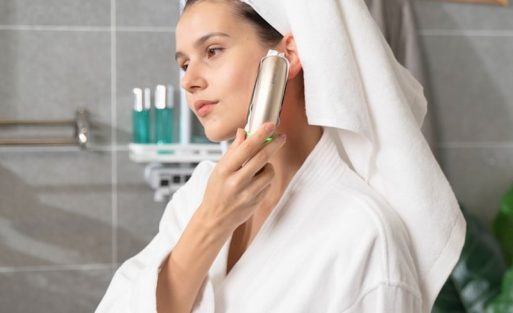
The GlowLift Pro combines three distinct modalities: EMS microcurrent for muscle toning, ultrasonic deep infusion (operating at 1 MHz frequency) to help drive serums deeper into the dermis, and ionic purification — positive ions draw impurities out, negative ions push nourishing molecules in. It’s a clinic-inspired trifecta in a device that fits in a makeup bag.
Meet the GlowLift Pro: What You Get
The unboxing experience is quietly premium. The device itself is matte silver with satisfying weight — not so heavy as to fatigue your wrist, but substantial enough that it doesn’t feel disposable. In the box: the GlowLift Pro, a USB-C charging cable, and a printed user manual with technique guides for different facial zones. Charging takes about 90 minutes and a full charge lasts approximately a week of daily 10-minute sessions.
The operating interface is intentionally minimal: one multi-function button cycles through the three modes (EMS, ultrasonic, ionic), with intensity levels indicated by LED pulses. I appreciate that the design doesn’t require an app — no Bluetooth dependencies, no subscription model. You press, you glow, you move on with your evening.
Key Specs at a Glance
EMS microcurrent output · Ultrasonic 1 MHz frequency · Five intensity levels · Waterproof head for easy cleaning · USB-C rechargeable · Suitable for all skin types except broken or inflamed skin
“What struck me first wasn’t the technology spec sheet — it was how naturally it fit into a ten-minute evening ritual. The barrier to daily use is almost zero.”
Week 1: The Learning Curve
I started on a Monday evening with a freshly cleansed face — and I want to pause here because this step matters enormously. To complete my prep properly, I was already using the LumiGlow Sonic Facial Cleansing Brush ($19.99), which uses 12,000 sonic vibrations per minute to clear away residual makeup, oil, and dead surface cells. A genuinely clean canvas is essential before EMS — any barrier layer reduces conductivity and diminishes results. I cannot overstate how well those two devices pair together.
Back to Week 1. My first few sessions were awkward. The manual recommends applying a conductive gel or a water-based serum before gliding the device across each facial zone — I used a lightweight hyaluronic acid serum. Getting the pressure and speed right takes practice: too fast and the EMS barely registers; too slow and you feel an uncomfortable static sensation.
By Day 4, I had found my rhythm. Sessions settled into about 10–12 minutes: forehead, temples, cheekbones, jawline, and neck, always moving upward and outward (never downward — that’s critical for lifting protocols). I didn’t notice visible changes in Week 1, which is entirely expected. What I did notice: my face felt distinctly more awake the morning after each session — a kind of flushed, slightly firmer sensation that I had previously only experienced after a professional facial.
Week 1 Verdict
Investment in technique, not results — yet. The device delivered a genuinely pleasant sensation at intensity level 3 and above. Zero skin irritation. The biggest lesson: prep your skin properly, be patient with the learning curve, and commit to the upward-stroke protocol.
Week 2: The First Real Changes
Something shifted around Day 10. I noticed it first in photographs rather than the mirror — the jawline in my profile shots had a slightly cleaner definition, a subtle crispness that hadn’t been there before. My partner — who knew I was testing the device but was deliberately not told what to look for — commented that I looked “well-rested” on Day 12. I’ll take it.
Week 2 is where consistency begins to pay dividends, and it’s also where I understand why people abandon these devices prematurely. The changes at this stage are genuinely subtle. If you’re expecting a before-and-after transformation in 14 days, you will be disappointed and you will put the device in The Drawer. But if you approach it as training — the way you would a gym membership — the accumulation of micro-adaptations becomes visible over time.
I increased intensity to Level 4 on my cheekbones and jawline zones. The sensation at this level is a distinct, rhythmic pulse — not painful, but unmistakably present. I also started incorporating the ionic mode (the third setting) after each EMS session, gliding the device slowly across my full face to help push my vitamin C serum deeper into the skin.
Week 2 Verdict
First whispers of definition. The most encouraging week for long-term commitment — because once you see the initial changes, you want to protect them. I also noticed markedly better serum absorption, which I attribute to the ultrasonic infusion mode layered into my routine.
Week 3–4: The Results I Would Actually Photograph
By Week 3, the changes were no longer subtle. My cheekbones had a lift that I had honestly attributed in recent years to favorable lighting and good angles. The nasolabial area — the fold that runs from nose to corner of mouth — appeared visibly softened. My neck, which I had been treating along with my face in every session, had a tautness I genuinely hadn’t seen in years. I took side-by-side photographs and could not deny the difference.
Week 4 felt like consolidation rather than new discovery. The definition I had gained held steady, which suggests actual muscle adaptation rather than temporary inflammation or water-retention effects. I maintained intensity at Level 4 for most zones, venturing briefly to Level 5 on the jawline — the tingle at that setting is very present but entirely tolerable.
Week 2
First visible jawline definition
First visible jawline definition
Week 3
Cheekbone lift + softened lines
Cheekbone lift + softened lines
Week 4
Tighter neck, held results
Tighter neck, held results
A note on realistic expectations: I am 38 years old with what I would describe as early-to-moderate signs of aging — slight softening of the jawline, some perioral lines, a little less brightness in the skin overall. This device is, in my experience, most impressive for people in their late thirties to early fifties who have noticeable but not severe laxity. If you’re 28 with very little to address, you’ll see less dramatic change. If you’re dealing with significant, advanced skin laxity, this device will help but you may want to have realistic conversations with a dermatologist as well.
For a deeper exploration of how at-home devices are reshaping the 2026 beauty landscape, I’d recommend reading our guide to the Best At-Home Facial Beauty Devices in 2026 — it puts the GlowLift Pro in useful context alongside LED and sonic options.
GlowLift Pro vs. Professional Facial vs. Manual Massage
One of the most practical questions you can ask about a $103.99 home device is where it honestly sits relative to professional treatments and the free alternatives you already have access to. Here’s how I would position each:
| Factor | GlowLift Pro EMS | Professional Facial | Manual Gua Sha / Massage |
|---|---|---|---|
| Average Cost | $103.99 one-time | $120–$250 per session | $0–$40 (tool only) |
| EMS / Microcurrent | ✔ Yes | ✔ Yes (high-grade) | ✘ No |
| Serum Infusion | ✔ Ultrasonic | ✔ Professional-grade | ✘ Surface only |
| Frequency of Use | Daily | Monthly (typically) | Daily |
| Technique Dependence | Moderate | None (esthetician-led) | High |
| Visible Results Timeline | 2–4 weeks | 24–48 hours | 4–6 weeks |
| Long-term ROI | Excellent | Expensive at scale | Good if consistent |
| Skin Penetration Depth | Mid-dermis | Deep (varies by treatment) | Superficial |
The honest summary: a professional microcurrent facial delivers a more powerful signal and the hands of a skilled esthetician. But at $150–$250 per session, maintaining the frequency required for lasting results becomes a genuine financial commitment. The GlowLift Pro is not a replacement for professional treatments — it’s the maintenance layer that keeps the investment working between appointments, or a legitimate standalone protocol for those who can’t or won’t budget for regular clinic visits.
When It’s Worth $103.99 — and When It Isn’t
Worth Every Dollar If You Are…
In your late 30s to early 50s and beginning to see softening in the jaw, neck, or cheekbone architecture. Disciplined enough to use it daily for at least four weeks before expecting visible results. Someone who already has a solid skincare routine and wants an active device layer to amplify it. Looking to reduce the frequency — and cost — of professional facial appointments.
You Might Want to Reconsider If You…
Have a pacemaker or other implanted electrical device (EMS is contraindicated). Are pregnant (as a precaution, consult your OB-GYN). Expect one-week transformations — this device rewards patience, not impatience. Have active acne, rosacea flares, or broken skin (wait for your skin to calm before using EMS on affected areas).
Also worth noting: the GlowLift Pro is three devices in one. When I calculated my previous skincare device budget — separate ultrasonic spatula, separate ionic infuser, EMS wand — the GlowLift Pro consolidates the utility at a fraction of the combined cost. That alone made the $103.99 feel modest.
For broader context on how this kind of technology fits into the contemporary skincare conversation, The 2026 Skincare Shift is worth an evening read.
How I Build My Full Routine Around It
The GlowLift Pro doesn’t exist in isolation — it’s one layer in a thoughtfully assembled routine. Here is how the three devices I use most frequently work together:
1
Step One — Prep
LumiGlow Sonic Facial Cleansing Brush
$19.99
12,000 sonic vibrations per minute remove makeup residue, excess oil, and surface dead cells — creating the clean, receptive canvas that EMS and ultrasonic infusion require. This is my non-negotiable first step every evening. Without it, I genuinely believe my GlowLift Pro results would be 30–40% less pronounced. At $19.99, it’s also the easiest upgrade in this entire stack.
2
Step Two — Tone & Lift
GlowLift Pro EMS Facial Beauty Device
$103.99
The centrepiece of the routine. After cleansing, I apply a thin layer of hyaluronic acid serum and work the GlowLift Pro through each facial zone for 10–12 minutes. EMS mode first for muscle toning, then ultrasonic mode to push remaining serum deep, then ionic mode to lock in nourishment. The three-in-one functionality means I’m not juggling multiple devices mid-routine.
3
Step Three — Light Therapy
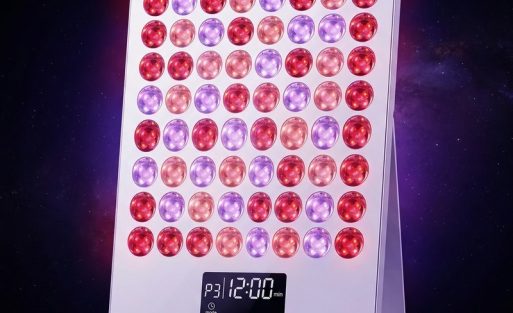
LumiPanel Pro LED Light Therapy Device
$160.99
On the evenings I have 20 extra minutes, I follow the GlowLift Pro with the LumiPanel Pro — a full-face LED panel delivering red (620–750nm) and near-infrared wavelengths shown to stimulate collagen and reduce inflammation. Where EMS addresses the muscular layer, LED therapy works at the cellular level. Together, they address aging from two complementary angles. It’s the combination I’d recommend to anyone serious about a complete at-home protocol.
For a deep-dive on the LumiPanel Pro specifically, read my 6-week LED light therapy panel review — the results from consistent use still surprise me. And if you’re new to at-home devices entirely, the 5 signs your skincare routine isn’t working is a useful place to audit your baseline before investing in active technology.
Frequently Asked Questions
How long before I see results from the GlowLift Pro EMS Facial Device?
Most users notice subtle changes between Days 10–14, with more visible lift and definition appearing around Week 3. The timeline depends on your baseline skin condition, consistency of use, and technique. Daily sessions of 10–12 minutes yield faster results than sporadic use. Think of it like a gym protocol: four sessions per week will not produce the results that seven sessions will.
Can I use the GlowLift Pro every day, or will it overwork my facial muscles?
Daily use at moderate intensity (Levels 2–4) is generally well-tolerated for most users. Some dermatologists caution that using any microcurrent device at maximum intensity every day may cause temporary muscle fatigue — begin at lower settings and increase gradually. If you experience any soreness or redness, reduce frequency to every other day and allow recovery time.
Do I need a special gel or serum to use the GlowLift Pro?
Yes — a conductive medium is essential. Without adequate moisture or serum on the skin, the EMS signal cannot conduct properly, reducing efficacy and creating an uncomfortable dry tingle. A water-based hyaluronic acid serum works beautifully and doubles as a treatment ingredient. Avoid oil-based products as the conductivity layer — oils resist the electrical current.
Is the GlowLift Pro safe for all skin types and ages?
The GlowLift Pro is suitable for most skin types, including sensitive skin, when used at appropriate intensity levels. It is not recommended for use over broken skin, active acne, rosacea flares, or for anyone with a pacemaker or implanted electrical device. Those who are pregnant should consult their physician before use. It is generally appropriate for users 25 and older, with the most noticeable results typically seen in the late-30s to early-50s demographic.
Ready to Lift, Tone & Glow?
The GlowLift Pro delivers three clinic-inspired technologies in one elegant device — EMS microcurrent, ultrasonic infusion, and ionic purification. At $103.99, it’s the daily ritual your skin deserves.


About author