No products in the cart.
Red Light Therapy at Home: What the Science Actually Says
Beauty & Wellness
Red Light Therapy at Home: What the Science Actually Says
Not just a spa trend anymore. We reviewed the clinical research — here’s what’s proven, what’s promising, and what’s pure marketing hype.
Red light therapy has made a remarkable transition. A decade ago, it was a niche dermatology clinic treatment. Today it’s a $1.8 billion global market, with consumer devices ranging from handheld wands to full-body panels sold at every price point. The marketing promises are ambitious: younger skin, faster recovery, better sleep, improved mood, hair regrowth — seemingly all from pointing colored LEDs at yourself for a few minutes a day. According to the American Academy of Dermatology (AAD), low-level light therapy has demonstrated clinical efficacy in treating acne and improving skin texture, though results vary based on wavelength, device quality, and consistency of use.
But here’s the problem: much of what’s being claimed online is significantly ahead of the evidence. Some benefits are genuinely well-supported by clinical research. Others are extrapolated from lab studies in ways that don’t translate to real-world use. And some claims are simply invented for marketing copy.
In this guide, we review what the peer-reviewed science actually says about red light therapy — the mechanism, the proven benefits, the unproven ones, and how to use at-home devices effectively if you decide to try it.
“Low-level laser (light) therapy stimulates fibroblast proliferation and collagen synthesis through a photochemical mechanism — the clinical evidence for wound healing and skin rejuvenation is genuinely compelling, though effect sizes vary considerably by device parameters.”
— Avci et al., Seminars in Cutaneous Medicine and Surgery, 2013 (one of the most-cited RLT clinical reviews)
📋 Table of Contents
What Is Red Light Therapy? The Actual Mechanism
Red light therapy (RLT) — also called photobiomodulation (PBM), low-level laser therapy (LLLT), or LED phototherapy — uses specific wavelengths of light to trigger biological responses in tissue. The key word is specific: not all light does this, and wavelength matters enormously.
The Wavelengths That Matter
The therapeutic range sits in two windows:
- Red light: 630–700 nm — primarily targets skin surface and superficial tissue. Most studied for collagen stimulation, skin rejuvenation, and wound healing.
- Near-infrared light: 810–850 nm — penetrates deeper, reaching muscle, joint tissue, and subcutaneous fat. Used more for pain relief, inflammation reduction, and recovery.
The Mitochondrial Mechanism
The leading theory — and the best-supported one — is that red and near-infrared light is absorbed by cytochrome c oxidase, a photoreceptor in the mitochondrial respiratory chain. This absorption triggers increased ATP (adenosine triphosphate) production — essentially increasing cellular energy. The downstream effects include:
- Increased fibroblast activity → more collagen and elastin production
- Reduced oxidative stress and inflammation markers
- Accelerated tissue repair and cellular turnover
- Improved local blood circulation
This isn’t speculative — it’s been replicated in cell culture, animal studies, and increasingly, randomized controlled human trials. The mechanism is real. The debate is about how significant the effect is at the energy densities consumer devices can deliver.
What Clinical Research Actually Shows
Let’s be specific. Here’s what the strongest clinical evidence supports, with the level of evidence noted:
Collagen Production & Skin Rejuvenation
A 2014 randomized controlled trial published in Photomedicine and Laser Surgery (Wunsch & Matuschka) found that patients receiving red light therapy showed significant improvements in skin complexion, skin feeling, and collagen density as measured by ultrasonography. A separate 2013 systematic review in Seminars in Cutaneous Medicine and Surgery identified consistent evidence for RLT’s ability to stimulate fibroblast proliferation. The collagen benefit appears to be one of the most replicated findings in human trials.
Wound Healing & Tissue Repair
This is arguably the area with the strongest and most consistent evidence. Multiple controlled studies show accelerated wound healing across various wound types — surgical incisions, diabetic ulcers, and burns. The mechanism (increased ATP → faster cellular repair) is well-established. This is also why RLT has FDA clearance for certain wound healing and pain applications in clinical settings.
Inflammation Reduction
Several studies, including a 2017 meta-analysis in European Journal of Physical and Rehabilitation Medicine, found RLT effective for reducing markers of inflammation in musculoskeletal conditions. The near-infrared wavelengths (810–850 nm) appear most effective here.
Acne Reduction
Blue light (415 nm) is more commonly used for acne, but combination red/blue protocols have shown meaningful results. A Cochrane-cited 2016 review found moderate evidence for blue-red light combinations reducing inflammatory acne lesion count by 50–76% in controlled studies.
What Red Light Therapy Is NOT Proven to Do
Managing expectations is part of being scientifically literate about any wellness intervention. Here’s where the evidence trails off significantly:
- Fat loss and body contouring: Some devices market RLT for spot fat reduction. While a few small studies show minimal effects on fat cell size at very specific parameters, the evidence is insufficient for meaningful body composition changes. Do not buy a red light device primarily for weight loss.
- Hair regrowth: There is limited evidence from small studies for androgenetic alopecia (pattern hair loss), but results are highly variable and the effect sizes are generally modest. The FDA-cleared devices for hair loss use specific protocols that most consumer panels don’t replicate.
- Mood and seasonal depression: Some preliminary research exists, but RLT in the red/NIR spectrum should not be conflated with light therapy for SAD (which uses bright white light at 10,000 lux — a completely different mechanism).
- Cancer treatment: Never a claim that should come from any consumer device. Some research explores photodynamic therapy (PDT) for cancer, but this uses photosensitizing agents in clinical oncology settings — entirely different from consumer LED panels.
- Dramatic overnight results: Collagen remodeling takes weeks to months of consistent treatment. Any device promising visible results in days is exaggerating.
+31%
Increase in collagen density measured in a 2014 RCT after consistent red light therapy use
Increase in collagen density measured in a 2014 RCT after consistent red light therapy use
630–850nm
The evidence-backed therapeutic wavelength window for photobiomodulation effects
The evidence-backed therapeutic wavelength window for photobiomodulation effects
3–5×/wk
Minimum treatment frequency cited in studies showing measurable skin improvement outcomes
Minimum treatment frequency cited in studies showing measurable skin improvement outcomes
At-Home vs Clinical Devices: Is There a Real Difference?
This is the most important practical question for anyone considering a consumer device, and the honest answer is: yes, there is a difference — but it’s smaller than clinic marketing suggests.
Clinical devices (used by dermatologists and physical therapists) typically offer:
- Higher irradiance (power density) — more energy delivered per unit time, meaning shorter treatment sessions for the same dose
- Verified wavelength accuracy — professional equipment is calibrated and certified
- Larger treatment area coverage in a single session
At-home devices compensate by requiring longer or more frequent treatment sessions to achieve comparable energy doses. For skin rejuvenation and collagen stimulation — which are slow, cumulative processes anyway — this trade-off is workable. You need consistency over months, not intensity in a single session.
What to look for in a home device: irradiance above 30 mW/cm² at the skin surface, verified wavelengths (not just “red” LEDs of unspecified nm), and a realistic treatment time of 10–20 minutes per session.
How to Use Red Light Therapy Correctly
💡 Frequency: Most studies showing positive results used 3–5 sessions per week. Daily use is generally safe, but the evidence for daily vs every-other-day is not meaningfully different for most skin outcomes. Consistency over months matters more than frequency within a week.
💡 Duration: Target 10–20 minutes per treatment area at the recommended distance. More time is not always better — there’s an inverted U-shaped dose-response relationship, meaning very high cumulative doses can actually inhibit the effect. Follow device guidelines.
💡 Distance: Closer is generally more effective. Most consumer panel manufacturers recommend 6–12 inches from the skin surface. At greater distances, irradiance drops significantly (follows the inverse square law). Measure and be consistent.
💡 Eye Protection: Always wear protective goggles or keep eyes closed when treating areas near the face. Red and NIR light is non-ionizing and low-risk, but direct, prolonged exposure to eyes is inadvisable — especially with near-infrared wavelengths, which are invisible to the naked eye but still penetrate ocular tissue.
💡 Skin Prep: Use on clean, product-free skin for maximum light penetration. Some practitioners recommend applying a hydrating serum immediately after treatment to capitalize on the increased cellular activity window.
The Devices Worth Considering
For at-home use, panel-style devices generally deliver better coverage and more consistent irradiance than handheld wands. Here are two strong options at very different price points:
1
Best Panel Device
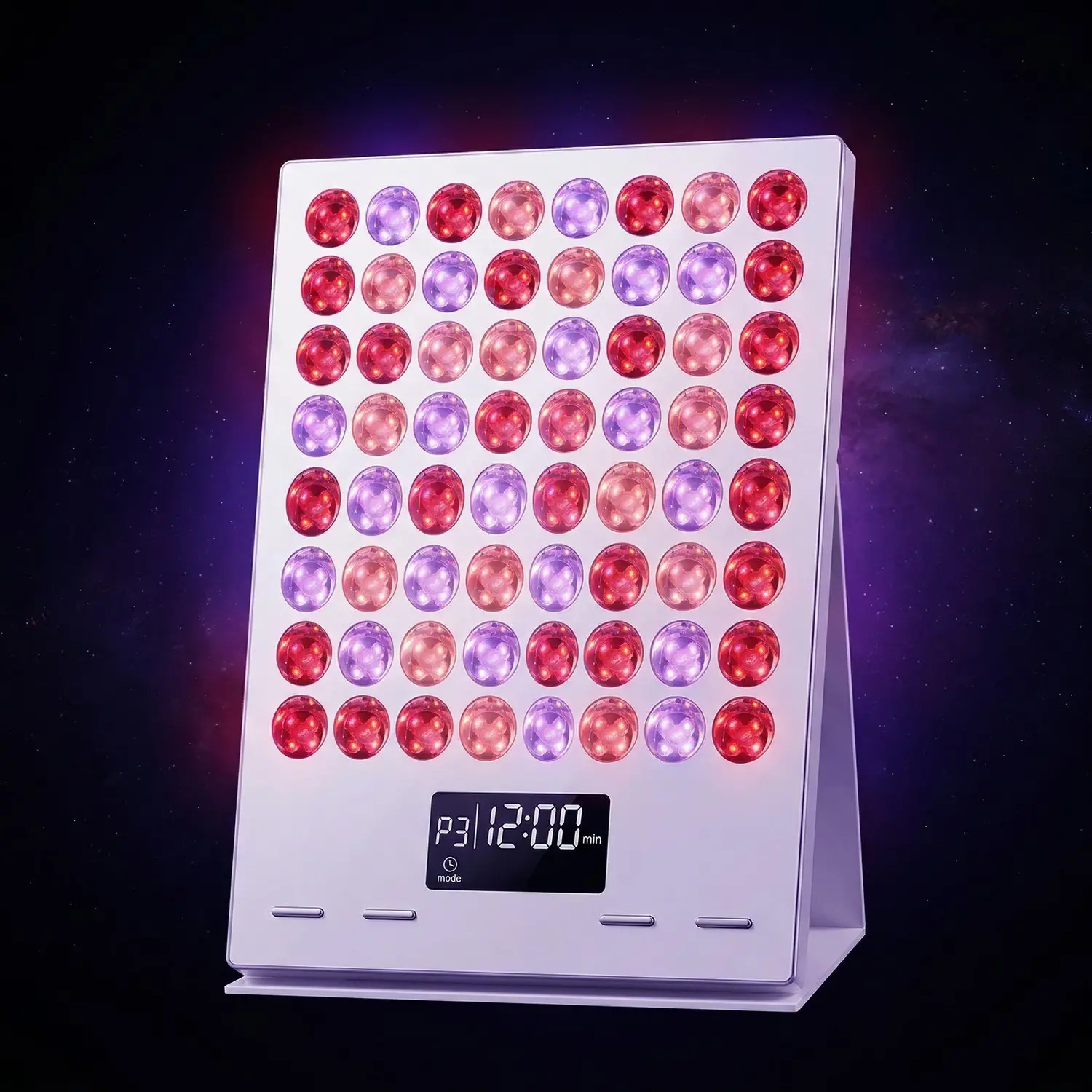
LumiPanel Pro LED Light Therapy Device
$160.99
A full-face photon rejuvenation panel with multiple wavelength modes targeting collagen stimulation, anti-aging, and skin brightening. Panel format delivers more consistent irradiance across the treatment area than spot devices. The multi-mode approach lets you target different outcomes (collagen vs inflammation vs pigmentation) in one device. For anyone serious about red light therapy as a long-term skincare protocol, this is the kind of device the clinical research was actually conducted with.
2
Best Multi-Technology
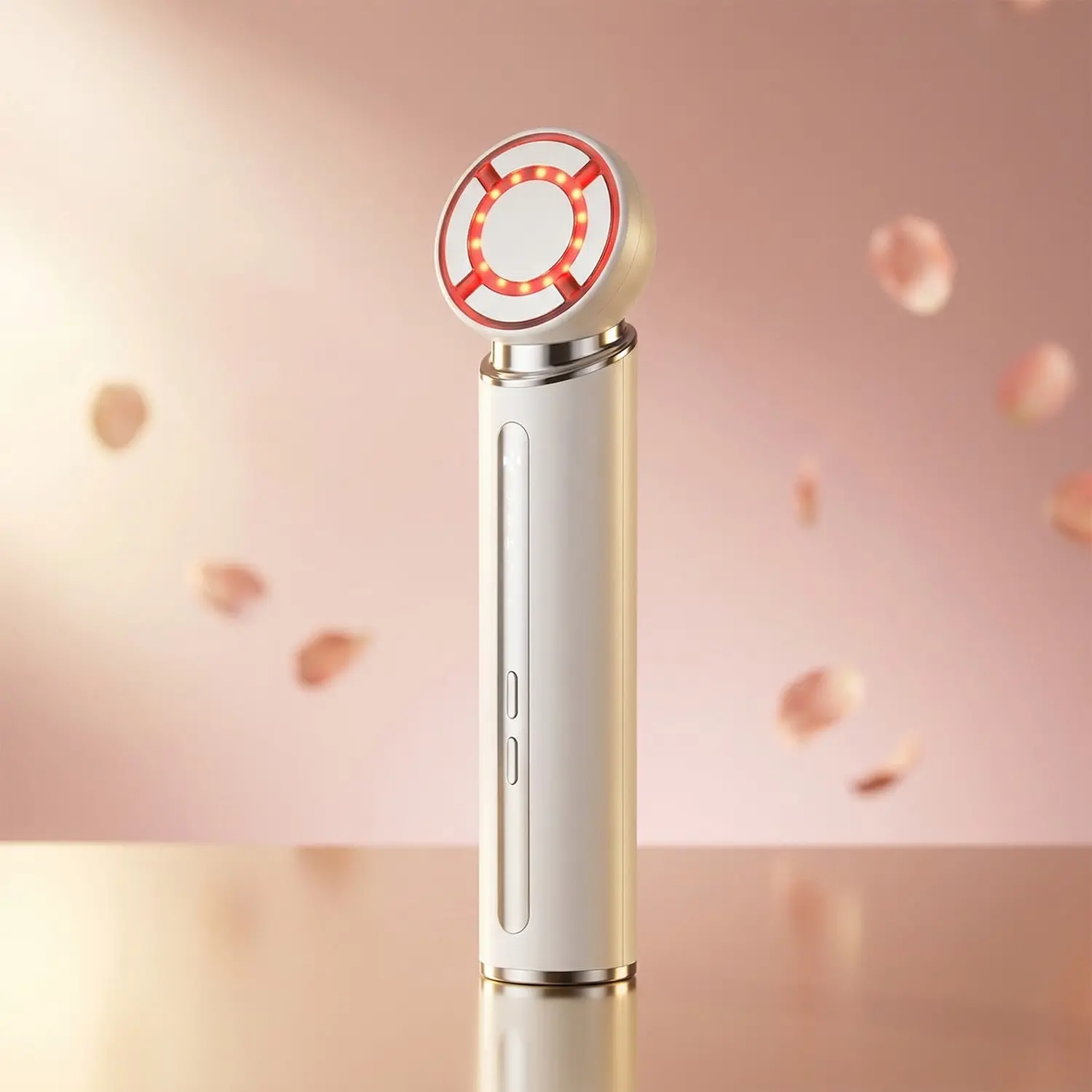
GlowLift Pro EMS Facial Device
$103.99
Combines LED phototherapy with EMS (electrical muscle stimulation) and ultrasonic ion lifting — three complementary technologies in one device. The EMS component adds a mechanical stimulation layer to the phototherapy’s cellular stimulation. For those who want more than light therapy alone, this multi-modality approach targets skin tightening, lifting, and rejuvenation simultaneously. The ultrasonic function also enhances serum absorption post-treatment.
Frequently Asked Questions
How long before I see results from red light therapy?
Most clinical studies showing measurable collagen improvements ran for 8–12 weeks of consistent use (3–5 sessions per week). Some users report improved skin texture and tone within 4–6 weeks, but collagen density changes typically require longer. Set realistic expectations: this is a slow, cumulative process. It’s not a treatment that produces dramatic before/after photos in two weeks, regardless of what social media content suggests.
Is red light therapy safe for all skin tones?
Red and near-infrared light therapy is generally considered safe across all Fitzpatrick skin types, as it does not cause photodamage or UV-related effects. It is non-ionizing radiation. However, if you take photosensitizing medications (some antibiotics, certain acne treatments, antifungals) you should consult your dermatologist before starting any light therapy, as these medications can amplify tissue response to light.
Can I use red light therapy every day?
Daily use is generally safe and many people do use it daily. However, the research doesn’t strongly indicate that daily is better than every-other-day for most outcomes — the biological process of collagen synthesis and cellular repair happens over days, not hours. A 5 days/week schedule is well-supported and practical. The most important variable is consistency over months, not session frequency.
What’s the difference between red light therapy and infrared sauna?
These are completely different technologies with different mechanisms. Infrared saunas use far-infrared radiation (1000–10,000 nm) primarily to heat the body and induce sweating — the benefit comes from the thermal effect. Red light therapy (630–850 nm) works at the cellular level through photochemical signaling in mitochondria, not through heat. They’re not interchangeable, though some people use both as complementary practices.
The Verdict
Red light therapy is one of the better-supported non-invasive skincare interventions available for at-home use in 2026. The evidence for collagen stimulation, skin rejuvenation, and wound healing is genuinely compelling — not wishful thinking. But it requires consistency over months, not weeks, and the device parameters matter enormously. Don’t buy based on marketing language. Buy based on verified wavelengths, adequate irradiance, and a realistic 8–12 week commitment to consistent use. The devices above are a reasonable starting point for that commitment.
Explore Our Beauty & Wellness Collection
Science-backed skincare devices and wellness tools — curated for results, not marketing hype.


About author