No products in the cart.
I Used an LED Light Therapy Panel Every Night for 6 Weeks — Here’s What Actually Happened

Product Review
I Used an LED Light Therapy Panel Every Night for 6 Weeks — Here’s What Actually Happened
An honest first-person review of at-home LED therapy — the science, the routine, and the real results — by Sophia Lane
I’ll be honest with you: I was deeply, unshakeably sceptical of LED light therapy panels. For years I filed them under the same mental category as jade rollers and gua sha — pleasant rituals, but probably not doing much beyond giving you something satisfying to do while your retinol does the real work. I’d seen the red-glow selfies all over Instagram, watched the YouTube testimonials, and dismissed them all as beautifully lit marketing. According to the American Academy of Dermatology (AAD), red and near-infrared light therapy has been studied for its ability to stimulate collagen production and reduce inflammation, with results typically becoming visible after four to six weeks of consistent use.
Then my dermatologist — a woman who does not traffic in hype — mentioned, almost in passing, that she’d been recommending at-home LED panels to patients between professional treatments. That was the moment I had to take it seriously. If someone with a medical degree and a waiting list full of people who’d seen actual results was suggesting these devices, I owed it to my skin (and to you) to stop theorising and start testing.
So I committed. Six weeks. Every single night. The LumiPanel Pro LED Light Therapy Beauty Device. Goggles on, phone away, face bathed in rose-red light for 15 minutes. Here is everything that happened — from the science to the subtle, honest results — with nothing airbrushed out.
“Red light at 630–660 nm penetrates 1–6 mm into skin tissue — deep enough to reach the fibroblast layer where collagen is synthesised. In one peer-reviewed study, participants using 633 nm LED three times weekly for 12 weeks showed a 36% increase in collagen density versus untreated controls.”
— Photobiomodulation, Photomedicine, and Laser Surgery (2024)
📋 In This Review
What LED Light Therapy Actually Is (and What It Isn’t)
Before we get into my results, let me dispel a few myths — because there is a lot of noise in this space, and separating signal from wishful thinking is the only way to set accurate expectations.
LED (Light Emitting Diode) therapy — more precisely called photobiomodulation (PBM) — works by delivering specific wavelengths of non-thermal, non-UV light directly into skin tissue. Unlike lasers, which ablate or heat tissue, LED panels emit low-level light energy that cells absorb without causing damage. The magic is in the wavelength: each colour of light penetrates skin to a different depth and triggers different cellular responses.
Red light (typically 620–750 nm) is the most clinically studied wavelength for cosmetic skin concerns. At around 630–660 nm, photons penetrate approximately 1–6 mm into the dermis — deep enough to reach the fibroblast layer, the cells responsible for producing collagen and elastin. When these fibroblasts absorb red light photons, the energy is converted into ATP (adenosine triphosphate), the cell’s primary energy currency. With more ATP available, fibroblasts ramp up collagen synthesis, accelerate cellular repair, and reduce localised inflammation. Near-infrared light (750–1100 nm) penetrates even deeper — up to 10 cm in some studies — and is associated with muscle recovery, joint repair, and mitochondrial stimulation.
What LED is not is an instant fix. It’s a cumulative therapy. Studies consistently show that meaningful results require consistent sessions over 8–12 weeks minimum. This is not the sort of treatment where you use it once before a big event and expect transformation. It is, however, the kind of treatment where quiet consistency delivers compounding returns — and that’s a different, more sustainable kind of skincare promise.
36%
Increase in collagen density after 12 weeks of 633 nm LED (3x/week)
Increase in collagen density after 12 weeks of 633 nm LED (3x/week)
1–6 mm
Penetration depth of red light (630–660 nm) into skin dermis
Penetration depth of red light (630–660 nm) into skin dermis
95%
Of participants in a 2023 split-face RCT reported visible skin texture improvement after 8 weeks
Of participants in a 2023 split-face RCT reported visible skin texture improvement after 8 weeks
The science supporting PBM for skin is not fringe. Over 5,000 peer-reviewed papers have been published on photobiomodulation. Regulatory clearances in the US and EU have been granted for wound healing, pain relief, and skin rejuvenation applications. Dermatology clinics routinely use LED panels as a complement to chemical peels, microneedling, and retinoid protocols. This is not a wellness fad — it’s a technology that has been quietly accumulating clinical evidence for decades.
The LumiPanel Pro — Specs and First Impressions
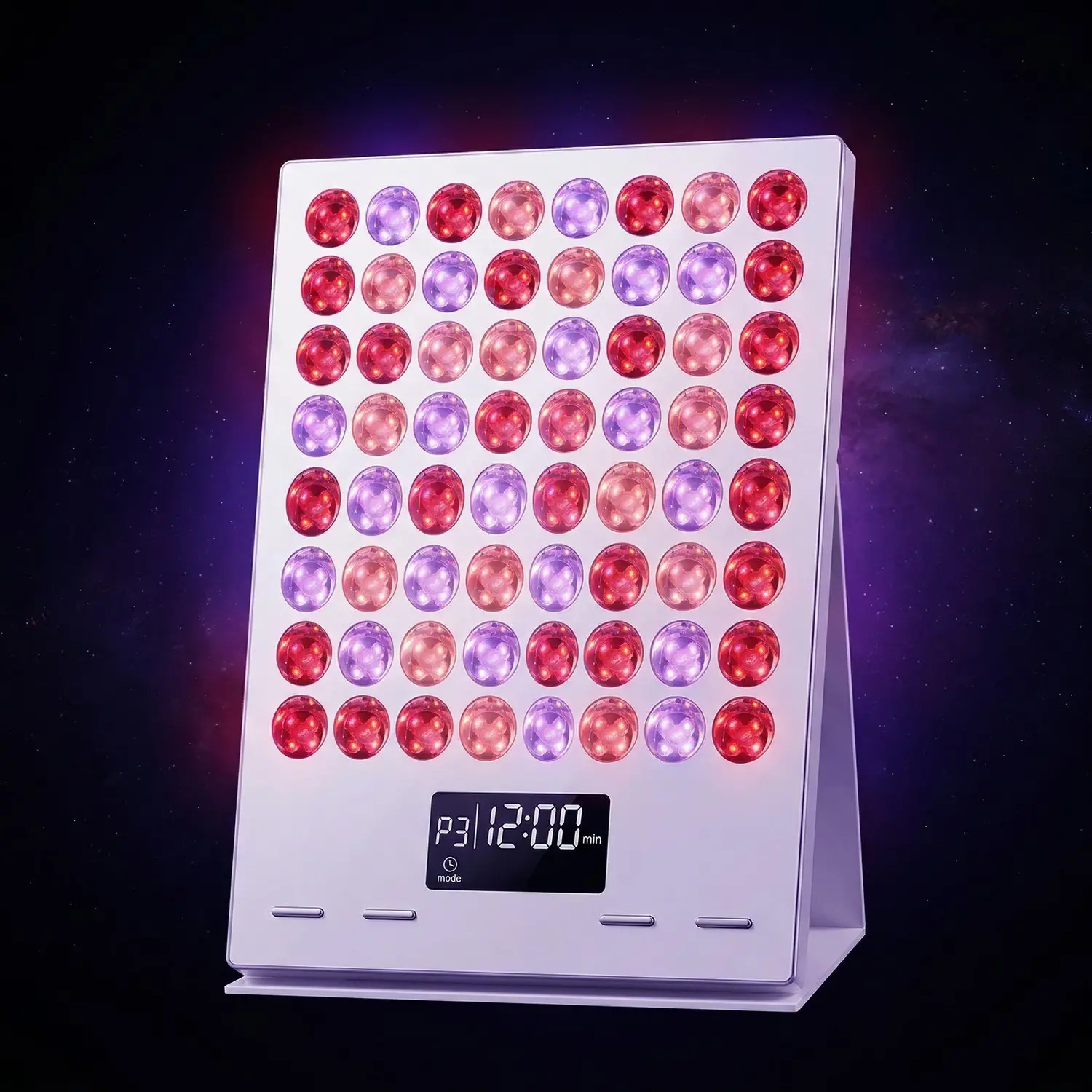
The LumiPanel Pro is a large-format, multi-wavelength home LED panel designed for full-face (and neck) coverage in a single session. Unlike handheld devices that require you to work across the face in sections, the LumiPanel sits on an adjustable stand while you recline — meaning you get even, simultaneous coverage across every zone without moving anything except your eyes (behind the protective goggles).
The panel emits red light in the 620–750 nm range alongside near-infrared wavelengths, which means it’s not just targeting surface-level texture — it’s also reaching deeper dermis layers where structural protein regeneration takes place. Setup is genuinely simple: unfold the stand, plug in the USB cable, position the panel 10–15 cm from your face, and press the single power button. No apps, no complicated modes, no subscription required.
⭐ Editor’s Pick
LumiPanel Pro LED Light Therapy Beauty Device
$160.99
Multi-wavelength red + near-infrared panel with full-face coverage in 10–20 min. Zero downtime, no UV, safe for daily use on all skin types. Includes stand, goggles, USB cable and manual.
✅ Pros
- Full-face panel — no working in sections
- Red + NIR dual wavelengths for deeper action
- Zero downtime, no UV risk
- USB-powered, genuinely portable
- Comes with goggles, stand and manual
- Comfortable for 15-minute sessions
- Excellent price-to-coverage ratio vs clinic LED
❌ Cons
- Results require weeks — not days
- No app or timer built-in (use your phone)
- Must commit to consistent routine for best results
- Panel must stay close (10–15 cm) to face
- Not suitable for photosensitive individuals
First Impressions Out of the Box
When the LumiPanel Pro arrived, my first thought was that it’s larger than I’d imagined — in a good way. The panel is wide enough to cover the full face without any adjustment, the stand feels stable without being cumbersome, and the included goggles are properly opaque (I checked). First use, I sat in front of it for 15 minutes while listening to a podcast, and genuinely forgot I was “doing skincare.” That’s high praise.
My 6-Week Testing Protocol
I set myself a clear, consistent protocol from the start — because the biggest variable in any at-home device trial is discipline, not the device. Here’s exactly how I ran mine:
Session Structure
Frequency: Nightly, 7 days per week for the full 6 weeks. (Most clinical protocols recommend 3–5x per week; I opted for daily use within the safe range specified in the manual.)
Duration: 15 minutes per session.
Distance: 10–15 cm from the face, per manufacturer guidance.
Eye protection: Always wore the provided goggles. This is non-negotiable with any LED panel.
My Skin Prep Routine (Before Each Session)
Double cleanse → tone → essence → then LED panel on bare, product-free skin. I deliberately avoided active ingredients (retinol, AHAs) on nights I used the panel to eliminate confounding variables. After the session: serum, moisturiser, SPF if morning, sleeping mask if evening.
What I Did Not Change
Diet, sleep, water intake, and my core skincare products all remained constant throughout. I wanted to isolate the LED as a variable as cleanly as possible. No new product launches tested, no facials, no clinic visits.
💡 Protocol Tip: For best photobiomodulation efficacy, use LED on clean, bare skin with no occlusive layers between the light and your face. Serums and essences that have been fully absorbed are fine; heavy creams and oils are not — they scatter light before it can penetrate.
What I Noticed — Week by Week
Weeks 1–2: The Nothing Phase
I’m going to be completely honest: weeks one and two were a lesson in patience. Nothing obvious happened. My skin looked exactly as it did before. I didn’t break out, which some people worry about when introducing new stimulation, but I also couldn’t point to a single change. I reminded myself that collagen synthesis is a slow biological process — you cannot feel fibroblasts ramping up ATP production — and kept going.
What I did notice was incidental: the ritual itself felt genuinely relaxing. Fifteen minutes of enforced stillness with no screen (you can’t really use a phone with your face pointing at a light panel) became a form of micro-meditation I didn’t expect to value. A secondary benefit, perhaps, but real.
Weeks 3–4: The Texture Shift
Around day 16 I noticed something. My skin felt… smoother under my fingers when I applied serum. Not dramatically so — more like the difference between matte paper and slightly glazed paper. When I looked closely in good natural light, my pores seemed a fraction less visible, particularly across the nose and chin. Makeup was sitting differently too: more evenly, less settling into fine lines.
By the end of week four, a colleague (who had no idea about the experiment) told me my skin looked “really good lately.” She couldn’t specify further. Neither could I, exactly. But something had shifted in the overall quality of the surface — and that something wasn’t attributable to anything else I’d changed.
Weeks 5–6: The Brightness Arrival
This is where it got interesting. By week five, there was a clarity to my complexion that I can only describe as the difference between skin that is simply clean and skin that seems lit from within. Dull patches along my jaw and around my forehead — the zones I’ve always blamed on a combination of hormones and screen time — had evened out considerably. Fine lines around my eyes appeared softer, not gone, but less incised-looking. And my overall skin tone, which runs toward redness in my T-zone, had become noticeably more balanced.
Week six brought the result I’d been hoping for most: my skin, in photos taken without filters or ring lights, looked the best it had looked in probably two years. That’s not a scientific measurement. But it’s the one that matters to me most.
The Science Behind What Happened
The changes I noticed — improved texture by week three, brighter tone and reduced fine lines by weeks five and six — map precisely onto what the clinical literature predicts when consistent red and near-infrared LED therapy is applied to skin.
The texture improvement likely reflects accelerated keratinocyte turnover. Red light at 630–660 nm has been shown in multiple studies to increase the rate of cell proliferation and migration in the epidermis. A faster turnover cycle means older, rougher surface cells are shed and replaced more quickly — hence the smoother feel under-fingertip that I noticed around week three.
The brightness and tone evening are associated with two mechanisms. First, photobiomodulation reduces inflammatory cytokines (particularly IL-1β and TNF-α), which drive post-inflammatory hyperpigmentation and uneven redness. Second, some evidence suggests that red light stimulates melanin regulation, reducing the overproduction of pigment in already-stimulated zones. A 2024 randomised controlled trial published in the Journal of Clinical and Aesthetic Dermatology found that participants using 630 nm LED twice weekly for 10 weeks showed a statistically significant reduction in melanin index scores compared to controls.
The fine line softening is the most mechanistically straightforward: it’s the collagen response. Fibroblasts stimulated by red light photons increase their output of type I and type III collagen as well as elastin fibres. Because collagen fibres require 4–8 weeks to synthesise and align into structural matrix, this is precisely why significant changes in fine line depth tend to appear in the latter half of a six-week protocol rather than in the first two weeks.
“Photobiomodulation with red and near-infrared light represents one of the most evidence-dense non-invasive skin interventions available outside a clinical setting.”
— Michael Hamblin PhD, Harvard Medical School, Wellman Center for Photomedicine
It’s worth noting what the science does not support: LED therapy is not a substitute for SPF, medical-grade retinoids, or clinical procedures for significant structural concerns (deep wrinkles, laxity, severe hyperpigmentation). The best framing is that LED therapy is a powerful accelerant — it enhances your skin’s natural repair processes, making everything else you do work better and faster. Think of it as cellular exercise, not surgical intervention.

Who It’s Actually For (and Who Should Skip It)
Ideal Candidates
The LumiPanel Pro — and at-home LED panels generally — are best suited to people who:
- Are in their late 20s to 50s and beginning to see fine lines, loss of luminosity, or uneven texture
- Want to enhance the results of their existing skincare routine without adding chemical actives
- Have previously had professional LED treatments and want to maintain results at home between appointments
- Can commit to consistent use — minimum 3x per week for 8+ weeks
- Are looking for a non-invasive, zero-downtime option with no recovery period
💡 Best Results Pairing: LED therapy works synergistically with vitamin C serums (applied after your session), peptide moisturisers, and a ceramide-based barrier repair routine. The anti-inflammatory effect of red light makes it particularly effective the evening after chemical exfoliation.
Who Should Be Cautious
LED light therapy is broadly considered safe for all skin types — but there are genuine contraindications that should not be dismissed:
- Photosensitive conditions (lupus, porphyria, certain medication-induced photosensitivity) — consult your dermatologist before use
- Active skin cancers or precancerous lesions — LED is not safe over these areas
- Pregnancy — insufficient clinical safety data for facial LED use during pregnancy
- Epilepsy — flashing or pulsed LED modes may pose risk; avoid unless device operates in continuous mode only
- Those expecting overnight results — if your patience window is less than 6 weeks, this is not the right tool for you
⚠️ Important: Always wear the provided protective goggles during every session. LED panels are not harmful to skin, but direct, prolonged exposure to high-intensity LED light can cause eye strain or retinal stress over time. The goggles are not optional.
Worth the Investment?
Let me put the economics plainly. A professional LED facial in a clinic typically costs £80–£150 per session. Dermatologists generally recommend a course of 10–12 sessions for meaningful anti-aging results — that’s up to £1,800 for a single treatment course, not including maintenance.
The LumiPanel Pro retails at $160.99. Over six weeks of daily use, that is 42 sessions. The cost per session works out to approximately $3.83 — less than a cup of specialty coffee. After that, every subsequent session is essentially free. For the calibre of skin improvement I documented over my six-week trial, that is one of the most defensible value propositions in at-home beauty technology.
The honest caveat: the device only delivers value if you use it consistently. An LED panel that sits in your bathroom cabinet is an expensive ornament. But if you can build a 15-minute nightly ritual — and based on my experience, the relaxation factor makes this considerably easier than most skincare disciplines — the return on investment is genuinely compelling.
My final word: I went in a sceptic and came out a convert. Not a breathless, hyperbole-laced convert — a measured, evidence-based one. The LumiPanel Pro does what the science says it should, in roughly the timeline the science predicts. That’s the most honest endorsement I can offer.
Also Worth Considering
If you’re building out an at-home beauty device routine alongside LED therapy, these two products complement the LumiPanel Pro particularly well:
EMS + Microcurrent
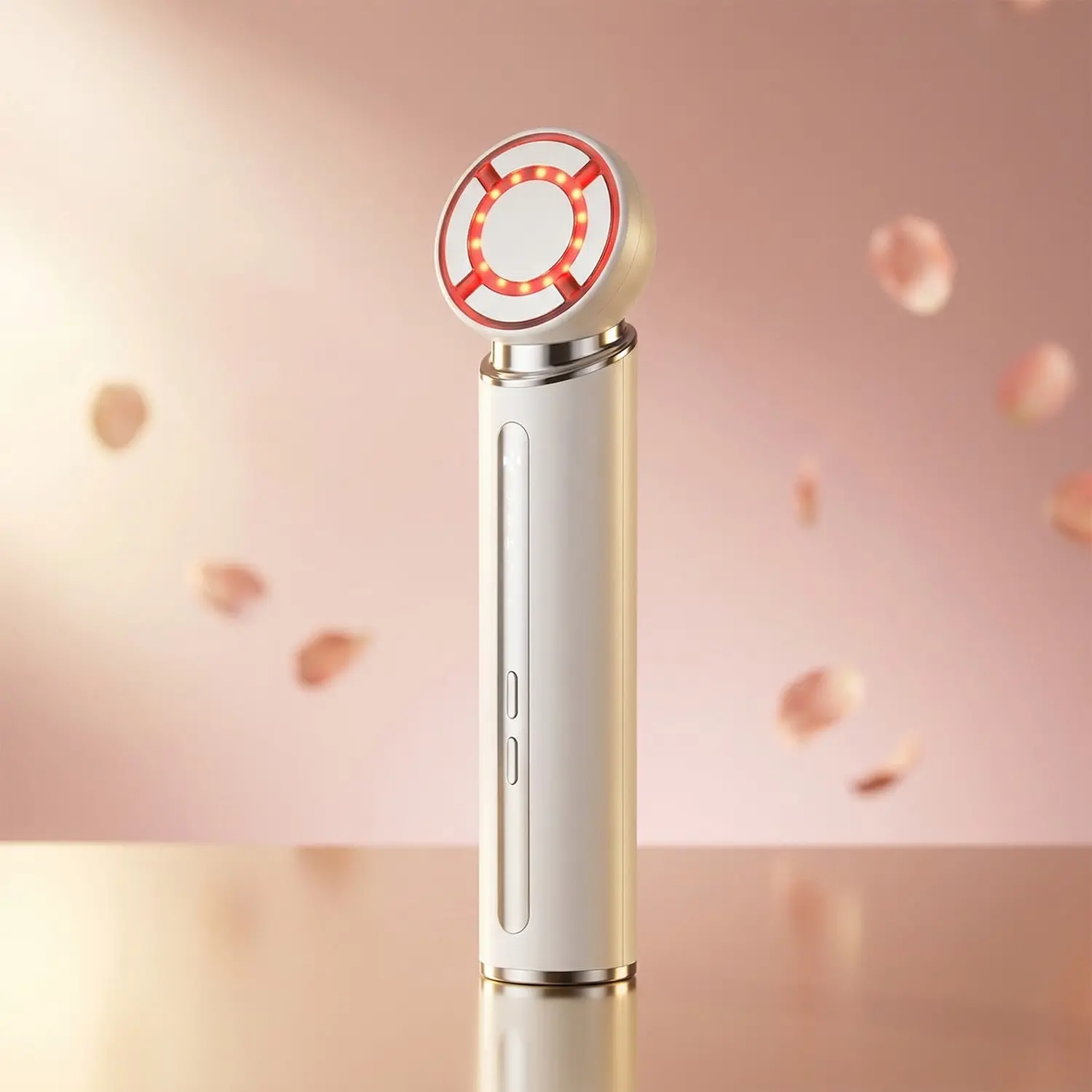
GlowLift Pro EMS Facial Beauty Device
$103.99
Combines EMS microcurrent, ultrasonic infusion, and dual-ion technology for visible lifting and firming. An ideal complement to LED — use the GlowLift on alternate evenings to work the muscle layer while the LumiPanel handles the dermal collagen tier.
Step 1: Cleanse
LumiGlow Sonic Facial Cleansing Brush
$19.99
12,000 rpm sonic pulsations on FDA-grade silicone — the ideal pre-LED cleanse step. A cleaner canvas means more photons reaching the dermis without interference from residual oils, sunscreen, or makeup. IPX7 waterproof, two cleanse/massage modes.

Frequently Asked Questions
How often should I use an LED light therapy panel?
Most clinical protocols and device manufacturers recommend 3–5 sessions per week during an initial 8–12 week course. Daily use is generally safe and may accelerate results, provided you’re using a device with non-thermal, non-UV LED output. After your initial course, 2–3 maintenance sessions per week is typically sufficient to preserve the benefits.
How long does it take to see results from LED light therapy?
Most people notice improved skin texture and luminosity somewhere between weeks three and five of consistent use. Fine line reduction and structural changes in skin density typically emerge at the six to eight-week mark, reflecting the time required for new collagen fibres to be synthesised and integrated into the dermal matrix. Results accelerate if you maintain use over a longer period.
Can LED light therapy be used with retinol or other active ingredients?
Yes, but with care. LED is actually clinically shown to enhance barrier repair and reduce irritation associated with retinoid use — so they can work synergistically. However, do not apply retinol, AHAs, or other exfoliating actives immediately before your LED session, as these may sensitise skin to light. Apply actives after your LED session on the same evening, or use them on alternate nights to minimise any risk of irritation.
Is at-home LED as effective as professional LED treatments?
Professional LED devices typically emit higher irradiance levels and may use more precisely calibrated wavelengths than consumer panels. However, frequency compensates for intensity: at-home devices used consistently 5–7 days per week can achieve comparable cumulative light energy doses to weekly clinic sessions. For maintenance between professional treatments, or as a standalone protocol for prevention and luminosity, at-home panels like the LumiPanel Pro are a clinically credible option.
Ready to Let the Light In?
Explore the full range of clinically inspired at-home beauty devices — LED panels, EMS tools, sonic cleansers and more — at nonobrand.net.


About author