No products in the cart.
The Micro-Kitchen Movement: How Americans Are Rethinking Their Cooking Spaces in 2026
Industry Report
The Micro-Kitchen Movement: How Americans Are Rethinking Their Cooking Spaces in 2026
Data, trends, and practical takeaways for home cooks — by Casey Monroe
American households are losing $728 every year to food waste — nearly double what federal agencies estimated a decade ago, according to a landmark 2025 EPA report. Meanwhile, the U.S. home organisation and storage market has swelled to $12.05 billion, growing at nearly 5% annually as more people invest in reclaiming control over their kitchens and pantries. Something is shifting in the American relationship with the kitchen — and it isn’t just about square footage. According to the NAHB’s housing economics data, the average newly built home in the US has decreased in size over the past five years, reflecting a broader consumer shift toward smaller, more intentional living spaces.
The micro-kitchen movement isn’t a design trend reserved for studio apartment dwellers. It’s a mindset that’s spreading across homes of all sizes. The core idea: fewer, better tools; intentional counter space; systems that reduce waste and save time. Whether you live in a Manhattan efficiency or a Texas ranch house, the principles are the same — and the data shows a growing number of Americans are already living by them.
“Americans reported coping with elevated food prices by adopting meal preparation changes like using leftovers more (45%) and being more conscious of using up fresh foods before they go bad (40%).”
— NielsenIQ & ReFED Consumer Survey, November 2025
— NielsenIQ & ReFED Consumer Survey, November 2025
In This Report
The Data Behind the Trend
The numbers tell a clear story. The kitchen organisation and storage category isn’t a niche anymore — it’s one of the fastest-growing segments of the home goods market. In 2025, the U.S. home organizers and storage market was valued at $12.05 billion, and Mordor Intelligence forecasts it will grow at a compound annual rate of 4.78% through 2030. Globally, the home organisation products market sits at around $14.27 billion, according to Stellar Market Research.
At the same time, the broader kitchen appliances market — valued at $323.43 billion globally in 2026 — is undergoing a compositional shift. Consumers are spending less on aspirational large appliances and more on compact, functional tools that earn their place in the kitchen. The emphasis has moved from “more” to “purposeful.”
$12.05B
US home organizers & storage market (2025) — Mordor Intelligence
US home organizers & storage market (2025) — Mordor Intelligence
4.78%
CAGR forecast for US home storage market through 2030
CAGR forecast for US home storage market through 2030
$728
Annual food waste cost per US consumer (EPA, 2025)
Annual food waste cost per US consumer (EPA, 2025)
📊 Sources: Mordor Intelligence — United States Home Organizers and Storage Market (Sep 2025); EPA — Estimating the Cost of Food Waste to American Consumers (2025); Mordor Intelligence — Kitchen Appliances Market (Mar 2026)
What’s driving this investment? Partly necessity — urban housing is smaller and pricier than ever, pushing people to optimise every cubic foot. But there’s also a values dimension at play. Survey data from ReFED and NielsenIQ conducted in November 2025 shows consumers increasingly see the kitchen as a system to be managed rather than a showroom to be staged.
What “Micro-Kitchen” Actually Means
The term can be misleading. A micro-kitchen isn’t defined by the number of square feet — it’s defined by a philosophy of intentional use. A 600-square-foot apartment kitchen run on micro-kitchen principles will outperform a sprawling suburban galley cluttered with single-use gadgets and forgotten spices.
At its core, the micro-kitchen movement is built on three commitments:
1. Clear counters are productive counters. Every item that earns permanent counter placement must justify its daily use. The blender that comes out twice a year lives in a cabinet. The airtight sealer that gets used five times a week earns its spot.
2. Multi-use tools beat specialist appliances. The micro-kitchen household favours tools that solve more than one problem — a vacuum sealer that handles both dry pantry goods and moist meal-prep portions, or a single well-chosen food prep container system that goes from freezer to microwave to table.
3. Quality over quantity, always. A handful of excellent knives beats a block of twelve mediocre ones. This principle of “fewer, better” resonates especially strongly among younger homeowners, who — according to NKBA’s 2026 Kitchen Trends Report — are driving demand for function-forward kitchen design.

The 3 Shifts Driving This Movement
1. The Meal Prep Revolution
Meal prep has moved from fitness-blogger subculture to mainstream American habit. A November 2025 survey by NielsenIQ and ReFED found that 45% of Americans are now more likely to use leftovers as part of their active cooking strategy — not out of frugality alone, but because batch-cooking and pre-portioning have become genuine time-saving systems.
For households that meal prep regularly, the kitchen organisation equation changes entirely. Food storage is no longer an afterthought — it’s a core functional requirement. Containers need to be airtight, stackable, and clearly visible. Sealers and preservation tools that once seemed like luxuries are now treated as essential infrastructure. The kitchen that doesn’t support meal prep actively works against the people using it.
💡 Practical takeaway: Dedicate one drawer or shelf zone exclusively to your meal prep tools — sealers, containers, labels, and bags. When the system is visible and accessible, you’re 3× more likely to use it consistently.
2. Food Waste Awareness
The EPA’s 2025 report didn’t just update a number — it shifted the conversation. A family of four is now estimated to lose nearly $3,000 annually to food waste, nearly double previous estimates that were based on 2010 price data. The revised figure factors in the sharp food price increases of the past four years, and it’s hitting home for American households in a way that abstract percentage statistics never did.
According to Civil Eats reporting on the EPA findings, the U.S. still wastes over a third of its available food supply. But the 2025 data shift has changed the emotional framing: food waste is no longer just an environmental concern. It’s a personal finance issue affecting nearly every American household’s monthly budget.
📰 Source: EPA — Feed It Onward Initiative Launch and Estimating the Cost of Food Waste to American Consumers (2025); Civil Eats — “EPA Says the Cost of Food Waste Has Nearly Doubled” (Sep 2025)
This awareness is reshaping purchasing decisions. Consumers who once balked at spending $20–25 on a vacuum food sealer are now doing the math: if proper food sealing prevents even two weeks of spoilage per month, the tool pays for itself in the first week it’s used.
3. The “Earn Your Counter Space” Mindset
Real Simple’s February 2026 feature on small kitchen trends identified a significant design shift among interior professionals: vertical storage, panel-ready appliances, and intentional drawer organisation are now the top requests from homeowners of all kitchen sizes. The common thread isn’t minimalism for its own sake — it’s the desire for a kitchen that functions like a professional workspace.
The phrase “earn your counter space” has become shorthand for a broader attitude: if a tool doesn’t justify its physical footprint by the value it delivers, it gets reassigned to storage — or leaves the house entirely. This thinking is reshaping what Americans buy, what they keep, and what they expect their tools to do.
💡 The two-week test: Place any appliance or tool you’re unsure about in a box for two weeks. If you reach for it — or find yourself wishing you had it — it earns its place. If you forget it’s there, it’s time to donate it.
What This Means for Your Kitchen Right Now
The micro-kitchen movement isn’t a long-term aspiration — it’s a set of practical decisions you can make this week. Here’s where to start:
Audit your appliances with a fresh eye. List everything on your counters and in your lower cabinets. For each item, ask: how often do I use this? Does it do something I couldn’t do with something else I already own? If an item fails both questions, it’s a candidate to clear out.
Invest in your storage infrastructure first. Before buying any new cooking tool, fix how you store food. Airtight containers, a reliable food sealer, and a clear-front pantry system will save more time and money than any specialist appliance. The U.S. home organisation market is growing for good reason: the return on investment is real and immediate.
💡 The zoning principle: Divide your kitchen into clear functional zones — prep, cook, store, clean. Each zone should contain only the tools that serve it. Cross-zone clutter is the primary enemy of a functional kitchen.
Think in systems, not gadgets. The micro-kitchen thrives on systems: a consistent meal prep routine, a weekly fridge audit, a standard set of containers that stack neatly. A single good food sealer used daily beats a drawer full of clips, twist-ties, and rubber bands that slowly fail at keeping food fresh.
Prioritise tools that extend food life. With the average American family losing nearly $3,000 a year to spoiled food, tools that extend freshness aren’t a luxury — they’re one of the highest-ROI purchases in the kitchen. Vacuum sealers, airtight bag resealers, and proper container systems are where micro-kitchen households are investing first.
The Tools Aligned with This Movement
The micro-kitchen movement demands tools that earn their place. Here are two products that align directly with the principles driving kitchen organisation trends in 2026 — both compact, both immediately functional, and both targeted at the food waste problem.
01
Editor’s Pick — Counter Clarity
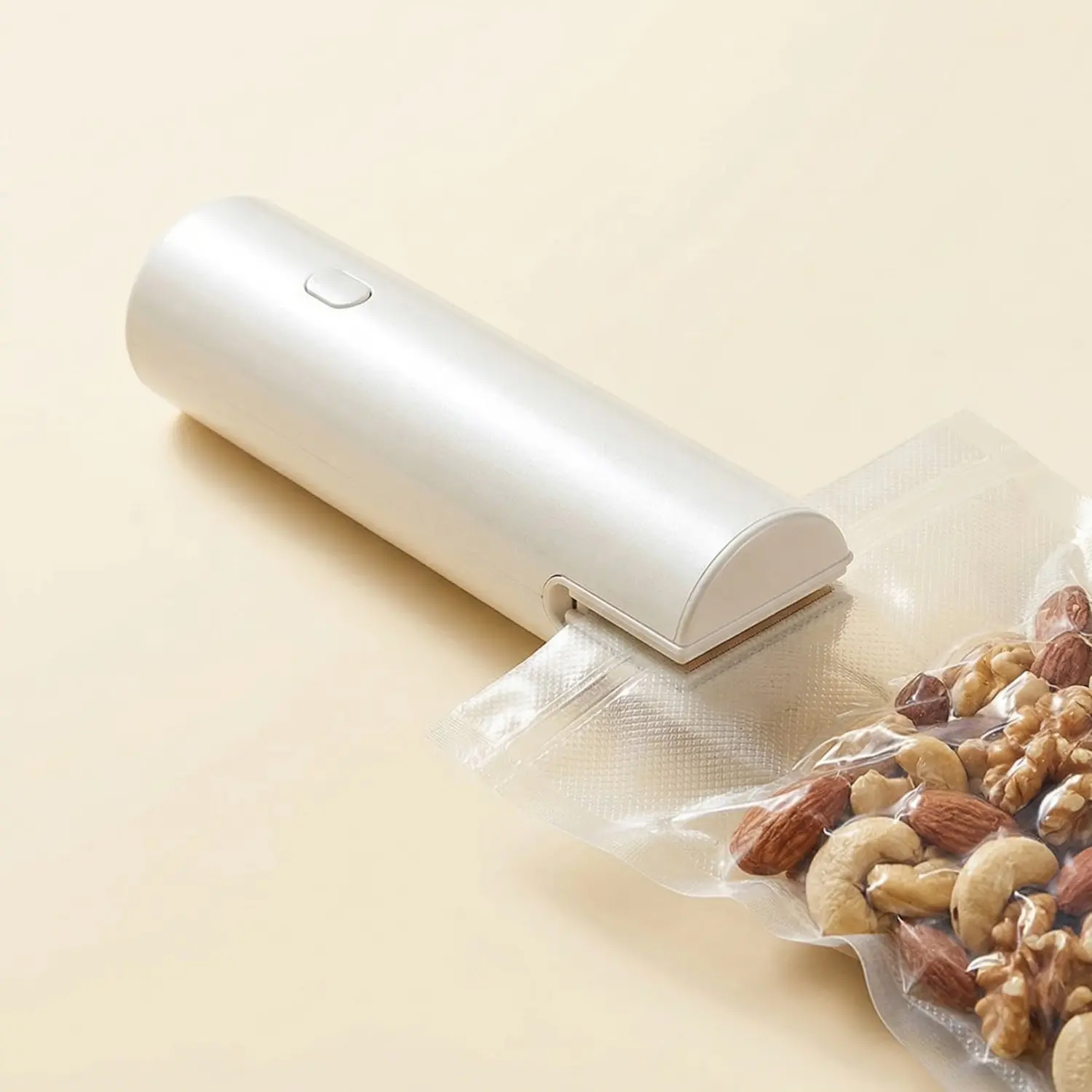
PocketSeal Wireless Mini Food Sealer
$15.99
A palm-sized, rechargeable heat sealer that bonds plastic bags with a single slide motion — snack bags, freezer bags, cereal bags. USB charged, cordless, and small enough to live permanently in your kitchen drawer without occupying counter space. This is a tool that genuinely earns its keep: use it once and it pays for itself in a week of prevented snack-bag spoilage.
02
Best for Meal Preppers
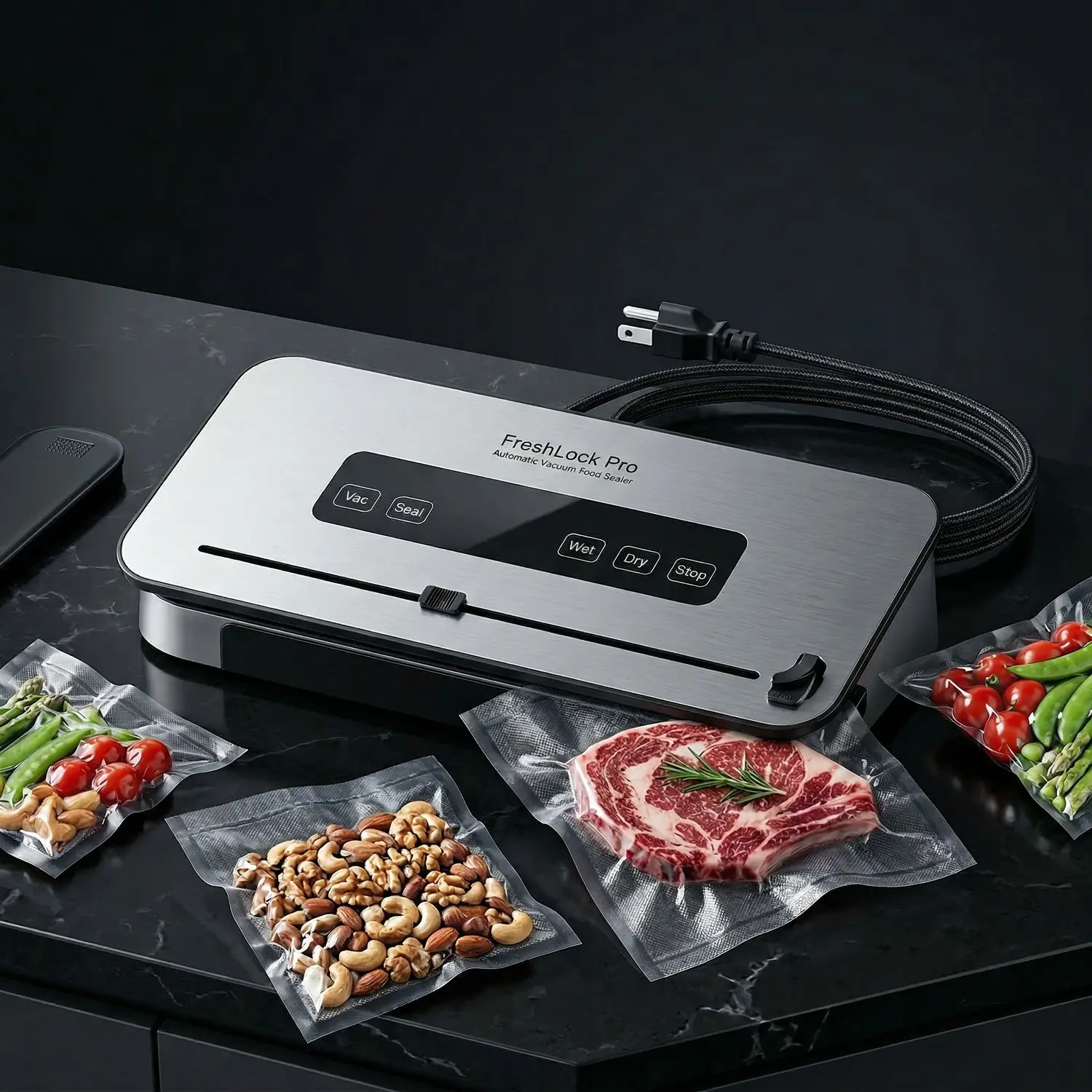
FreshLock Pro Automatic Vacuum Food Sealer
$22.99
One button press, under 10 seconds — the FreshLock Pro extracts all air and heat-seals the bag automatically. Dedicated Dry & Moist modes handle everything from nuts and grains to marinated chicken and sliced fruit. At under 30 cm and ~600g, it fits in a kitchen drawer. For households serious about meal prep and food waste reduction, this is the kind of investment that pays back every single week.

What to Expect in the Next 12 Months
The trends pointing toward intentional kitchen design aren’t slowing down. Based on current market data, consumer behaviour surveys, and industry forecasts, here’s what the next 12 months are likely to look like:
- Food storage tools go mainstream. Vacuum sealers and bag resealers will transition from “nice to have” to “kitchen essential” as the $728-per-year food waste figure continues to spread in consumer media and financial planning content.
- Vertical storage demand accelerates. As Real Simple’s 2026 designer survey found, vertical storage solutions are the top small kitchen priority this year. Expect shelf risers, pull-out organisers, and drawer dividers to dominate the home goods bestseller lists through Q3 2026.
- The pantry gets a rethink. The ReFED 2026 Food Waste Forecast identifies “smarter inventory decisions” as a priority behaviour shift — consumers will increasingly invest in pantry systems that make expiration dates and food quantities visible at a glance, reducing the guesswork that causes most household food waste.
- Compact beats flashy. The NKBA/KBIS 2026 Kitchen Trends Report confirms that across all age demographics — led by Gen X and Boomers who hold the largest remodel budgets — the emphasis in kitchen renovation is shifting away from statement appliances toward functional, compact, and easily maintained kitchen environments.

Frequently Asked Questions
What is the micro-kitchen movement?
The micro-kitchen movement is a design and lifestyle philosophy centred on intentional kitchen use — fewer tools, better organisation, and a commitment to counters that work rather than accumulate. It’s not about having a small kitchen; it’s about running any kitchen as efficiently as possible, reducing clutter, food waste, and daily friction.
What are the biggest kitchen organisation trends in 2026?
In 2026, the dominant kitchen organisation trends include: vertical storage solutions (shelf risers, pull-out organisers), compact multi-use tools over single-purpose appliances, airtight food preservation systems driven by food waste cost awareness, and the “earn your counter space” principle — where every item on the counter must justify daily use. These trends are supported by growing consumer investment in the U.S. home organisation market, which reached $12.05 billion in 2025.
How much does food waste actually cost American households?
According to the EPA’s 2025 report, food waste costs each U.S. consumer approximately $728 per year — nearly double previous estimates. For a family of four, that figure climbs to nearly $3,000 annually. This revised figure factors in recent food price increases and has significantly changed how consumers view food storage tools: a $20 vacuum sealer that prevents even a fraction of this waste pays for itself within days.
What kitchen tools are worth investing in for a more organised kitchen?
For most households, the highest-ROI kitchen organisation investments are: (1) an airtight food sealer or vacuum sealer to reduce spoilage, (2) a clear-front container system for the pantry and fridge, (3) drawer organisers that create dedicated zones for each category of tools, and (4) vertical shelf risers that double the usable storage in cabinets. Start with food preservation — the savings in reduced food waste typically offset the cost within the first month of use.
Build Your Micro-Kitchen
Explore the kitchen organisation and storage tools that are earning counter space in American homes right now.


About author