No products in the cart.
Why 60% of Cats Are Chronically Dehydrated (And Most Owners Don’t Know It)
Feline Health
Why 60% of Cats Are Chronically Dehydrated (And Most Owners Don’t Know It)
Veterinary research suggests the majority of domestic cats live in a state of chronic mild dehydration — and the symptoms are easy to miss. Here is what you need to know, and what you can do about it today.
Here is a number that should concern every cat owner: veterinary nutrition researchers estimate that somewhere between 40 and 60 percent of domestic cats are chronically mildly dehydrated at any given time. Not dangerously dehydrated — not in crisis — but consistently operating below optimal hydration, in a way that quietly degrades kidney function, urinary health, digestion, and coat quality over months and years.
The reason most owners do not know this? Their cats look completely normal. They eat. They play. They groom. They do not display the obvious distress signals that most people associate with dehydration in other animals. And yet the cellular evidence — detectable in urine concentration measurements and kidney function panels — tells a very different story.
This article explains why this happens, what to look for, and how to genuinely fix it.
In This Article
- The Evolutionary Reason Cats Don’t Feel Thirsty
- The Scope of the Problem: What Research Tells Us
- Symptoms Most Owners Miss
- Long-Term Health Consequences
- Practical Fixes That Actually Work
- The Best Tool for the Job: FlowPure Fountain
- Completing the Picture: Pet Environment Quality
- Frequently Asked Questions
40–60%
Of domestic cats estimated to be chronically mildly dehydrated
Of domestic cats estimated to be chronically mildly dehydrated
3x
Higher kidney disease risk in chronically under-hydrated cats
Higher kidney disease risk in chronically under-hydrated cats
70%
Of cats prefer moving water to still water when given the choice
Of cats prefer moving water to still water when given the choice
#1
Cause of vet visits in cats over 7: kidney and urinary disease
Cause of vet visits in cats over 7: kidney and urinary disease
The Evolutionary Reason Cats Don’t Feel Thirsty
To understand why cats are so prone to chronic dehydration, you need to understand where they came from. The domestic cat (Felis catus) descends from the African wildcat (Felis lybica) — a desert-adapted predator that evolved in an environment where standing water was scarce and unreliable. The wildcat’s primary water source was not a pond or stream; it was the moisture content of its prey.
A freshly caught mouse is approximately 65–70% water. A cat eating whole prey in the wild essentially drinks with every meal, extracting moisture directly from the tissue it consumes. This evolutionary reality shaped a physiology with a naturally suppressed thirst drive. When water was available, wildcats would drink it — but they did not need to seek it urgently because their meals provided most of what they needed.
The Problem with Modern Cat Food
Domestic cats eating dry kibble face a physiological problem their ancestors never encountered. Dry food contains roughly 8–10% moisture — compared to the 65–70% moisture of whole prey. This enormous disparity means kibble-fed cats must drink substantially more water than their instincts prompt them to seek. The result is a chronic hydration deficit that accumulates silently over years of feeding.
“Your cat’s body is optimised for a world where every meal comes with a built-in drink. Dry food changed that equation — but nobody told their kidneys.”
The Scope of the Problem: What Research Tells Us
The scientific literature on feline dehydration paints a consistent picture. Studies in veterinary nutrition journals have found that cats fed exclusively dry diets consume significantly less total water (food moisture plus drinking water combined) than cats fed wet food — despite the fact that dry-fed cats drink more from their bowls. They compensate, but incompletely.
Research cited by the ASPCA and veterinary nutritionists confirms that urine specific gravity — the primary clinical measure of hydration adequacy — is systematically higher in dry-fed cats than wet-fed or wild-diet cats. Higher urine specific gravity means more concentrated urine, which means the kidneys are working harder to maintain fluid balance and are more vulnerable to crystal formation, infection, and long-term damage.
Chronic kidney disease is now the leading cause of death in cats over 7 years old. The causal relationship between lifelong mild dehydration and early kidney damage is well-established in veterinary medicine, even if it remains underappreciated by the general public.
Symptoms Most Owners Miss
This is where chronic feline dehydration becomes genuinely difficult to manage: the early-stage symptoms are either invisible to the naked eye or are easily attributed to other causes.
Subtle Signs of Chronic Dehydration in Cats
Reduced litter box frequency. Healthy cats should urinate 2–4 times per day. If your cat is going once or twice daily with very concentrated, dark urine, their kidneys may be compensating for low water intake by maximising urine concentration.
Coat quality changes. A dull, slightly rough, or less glossy coat is one of the earliest visible signs of inadequate hydration. Skin cells require water to function optimally; the coat reflects this clearly once the deficit is significant enough.
Lethargy or reduced play drive. Mild dehydration causes measurable decreases in energy and cognitive alertness in mammals. A cat that is slightly less playful than usual, especially in warmer months, may simply be under-hydrated.
Skin elasticity test failure. Gently pinch the skin at the scruff of your cat’s neck and release. In a well-hydrated cat, it snaps back immediately. In a dehydrated cat, it returns slowly, forming a visible tent. This is a reliable clinical indicator your vet will use — and you can do it at home.
Dry or tacky gums. Run a clean finger along your cat’s gum line. Well-hydrated gums are moist and slippery. Tacky, sticky, or dry gums indicate meaningful dehydration that warrants veterinary attention.
Constipation. Water is essential for healthy bowel motility. Chronically dehydrated cats often experience hard, dry stools and infrequent defecation — a quality of life issue that is easily overlooked until it becomes painful or obstructive.
Long-Term Health Consequences
The health consequences of chronic feline dehydration are not theoretical — they are well-documented and costly, both financially and in terms of your cat’s wellbeing.
Feline Lower Urinary Tract Disease (FLUTD)
FLUTD is a catch-all term for conditions affecting the bladder and urethra in cats, including struvite crystals, calcium oxalate stones, idiopathic cystitis, and urethral obstruction. Low water intake is the single most consistent modifiable risk factor across all these conditions. Increased urine concentration provides the supersaturated environment in which crystals form. Increasing dilution is the primary preventive intervention.
Chronic Kidney Disease (CKD)
CKD affects an estimated 1 in 3 cats over age 12 and is the most common cause of death in senior cats. Kidneys filter blood constantly; chronically concentrated urine forces them to work harder and exposes the tubular cells to higher concentrations of waste products. The cumulative effect over years is measurable nephron loss and declining filtration capacity. Adequate hydration from a young age is one of the most evidence-backed preventive strategies available.
Practical Fixes That Actually Work
The good news: chronic feline dehydration is genuinely addressable with straightforward interventions. You do not need expensive prescription diets or complex supplementation. You need to make water more appealing and accessible.
The Most Effective Interventions, Ranked
1. Introduce a circulating water fountain. Moving water activates cats’ evolutionary preference for fresh, flowing water and consistently increases intake by 30–70% in research studies. This is the single highest-impact change you can make.
2. Switch to wet food or add water to kibble. Even replacing one dry meal per day with wet food meaningfully increases total moisture intake. Adding a tablespoon of warm water or unsalted broth to kibble is a lower-cost option that many cats accept readily.
3. Increase the number of water stations. Cats in the wild would encounter water in multiple locations. Placing water bowls in 2–3 locations around your home — away from food bowls and litter boxes — can measurably increase spontaneous drinking frequency.
4. Use wider, shallower bowls. Cats have sensitive whiskers that can experience discomfort (whisker fatigue) when pressed against the sides of deep, narrow bowls. Wide, shallow dishes or fountain basins reduce this aversion and encourage longer drinking sessions.
5. Keep water consistently fresh. Cats are extremely sensitive to water quality and will reduce intake from bowls with even mild bacterial growth or taste changes. Changing water at least once daily and using filtered water where tap quality is poor makes a meaningful difference.
The Best Tool for the Job: FlowPure Fountain
★

Top Recommendation 2026
FlowPure 4L Wireless Pet Water Fountain
$18.99
The FlowPure addresses the core challenge — getting cats to drink more — through continuous gentle circulation that activates their instinct for moving water. Its 4L capacity serves multi-cat households for days between refills. The wireless pump eliminates the cord-in-water safety concern of many budget alternatives. Food-grade silicone construction resists biofilm formation and cleans easily. Triple-stage filtration (activated carbon, ion exchange resin, and fine mesh) removes chlorine, heavy metals, and particulates that affect taste. At $18.99, it is accessible enough that there is no compelling argument to delay.
Completing the Picture: Pet Environment Quality
Hydration is the most critical environmental factor in feline health, but it is not the only one. Two other products address the next most common quality-of-life concerns in cat households.
1
Odour Control
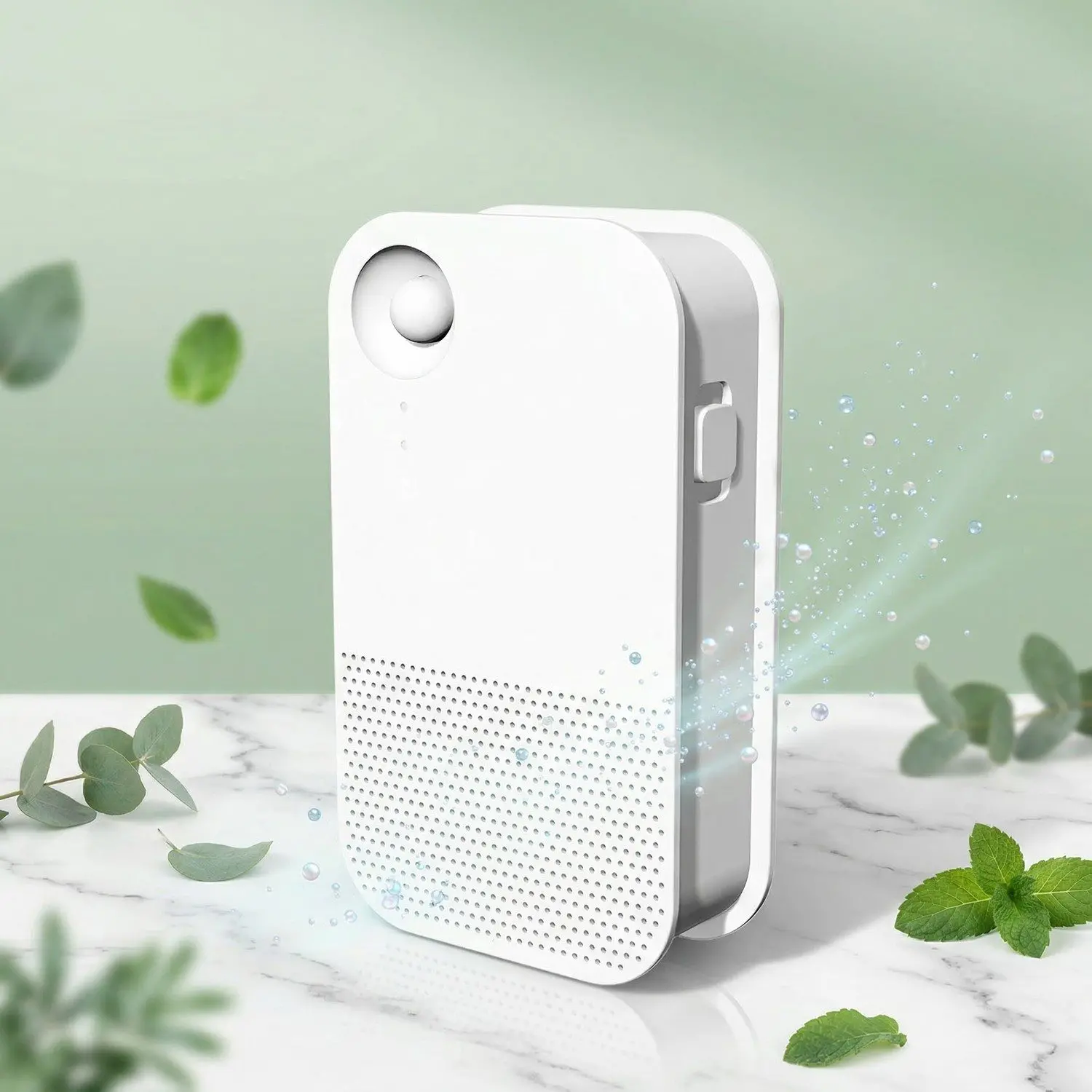
PureAir Pet Ionic Deodorizer — $22.99
Pet-related airborne odours come from volatile organic compounds released by dander, urine residue, and sebaceous secretions. The PureAir uses negative ion emission to bind and remove these molecules from the air rather than masking them with fragrance. Quiet, filter-free, and low-power, it runs continuously in the background to maintain consistently fresher air quality in rooms where cats spend time. A thoughtful complement to good cleaning habits rather than a replacement for them.
2

Litter Box
FreshSense Smart Litter Box Deodorizer — $27.99
Litter box odour is dominated by ammonia (from urea breakdown) and hydrogen sulphide (from bacterial activity). FreshSense uses catalytic neutralisation technology to chemically convert these compounds into odourless molecules at the source — before they escape into your living space. Motion-activated to conserve battery, it operates only when the box is actively used. No fragrances, no masking agents, no charcoal bags to replace. For cat owners managing litter box odour in smaller living spaces, it is a functionally elegant solution.
Frequently Asked Questions
How much water should a cat drink per day?
A general guideline is approximately 50–60ml of water per kilogram of body weight per day, including moisture from food. A 4kg cat should consume around 200–240ml total daily. Cats on wet food diets receive the majority of this from their meals; dry-fed cats must drink more to compensate. Tracking how much your cat drinks from their bowl or fountain is one of the simplest health monitoring habits you can adopt.
What are the clearest signs my cat is dehydrated right now?
The most reliable at-home checks are the skin tent test (pinch the scruff — it should snap back instantly) and gum moisture check (gums should feel slippery, not tacky). Reduced urination frequency, very dark or strong-smelling urine, lethargy, and constipation are also significant indicators. Severe dehydration with sunken eyes, extreme lethargy, or complete urine suppression requires immediate veterinary attention.
Will switching to wet food alone solve the problem?
Wet food is highly effective at increasing total moisture intake and is the gold standard recommendation for cats with existing urinary or kidney concerns. However, most cats benefit from a combination approach: wet food plus a circulating fountain. The fountain encourages additional spontaneous drinking between meals and provides backup hydration on days when appetite is reduced.
My cat drinks from the tap but ignores their bowl. Is this a dehydration sign?
Tap-seeking behaviour is a strong signal that your cat prefers moving water — which is exactly what a fountain provides in a controlled, hygienic form. If your cat actively seeks the tap but ignores their bowl, a circulating fountain is almost guaranteed to increase their overall water intake significantly. This is one of the clearest indicators that a fountain is the right intervention.
At what age should I start worrying about my cat’s hydration?
Hydration is important at every life stage, but the risk of dehydration-related disease increases substantially after age 7, when kidney function naturally begins to decline. That said, the habits formed in younger years — consistent access to palatable, fresh, moving water — create the foundation for lifelong kidney health. The best time to introduce a fountain is before problems emerge, not after.
The Simplest Thing You Can Do for Your Cat’s Health
Most cases of feline dehydration are entirely preventable. A circulating fountain is the single highest-impact, lowest-cost intervention available. The FlowPure is $18.99. Your cat’s kidneys will thank you for the next decade.


About author