No products in the cart.
The Real Cost of Food Waste — And the Kitchen Habits That Actually Fix It

🏡 Home & Kitchen
The Real Cost of Food Waste — And the Kitchen Habits That Actually Fix It
Americans throw away nearly $1,600 of groceries a year. Here’s what the data says about why it happens — and the practical habits (and tools) that change it.
You probably don’t think of yourself as someone who wastes food. But if you’re an average American household of four, you’re quietly throwing away $1,600 worth of groceries every single year. That’s not a rounding error — it’s a flight, a month’s groceries, or a quarter of a year’s car payment. In produce alone.
The problem isn’t a lack of intention. It’s systems. Specifically, most American kitchens aren’t set up to preserve, organise, or use food before it spoils. And with grocery prices still elevated in 2026, this has shifted from a mild inconvenience to a genuinely significant household expense.
Here’s what the research says about why we waste food — and which practical habits (and a handful of smart tools) can actually close the gap.
“After a busy work day, it’s stressful to come home to a messy kitchen and still have the motivation to cook. With excess clutter in the pantry and fridge, it’s impossible to find what you need.”
— Jennifer Moore, Professional Organiser & Founder, Organized Boutique · via Good Housekeeping, 2026
— Jennifer Moore, Professional Organiser & Founder, Organized Boutique · via Good Housekeeping, 2026
📋 What’s in this article
The Numbers: Just How Much Food Do Americans Waste?

The scale of American food waste is genuinely staggering — and most people significantly underestimate their own contribution to it.
According to RTS’s Food Waste in America 2026 report, the United States discards nearly 60 million tons — 120 billion pounds — of food every year. That’s approximately 40 percent of the entire US food supply. It’s the equivalent of every American throwing 975 apples directly into a landfill, annually.
The financial toll is equally striking. Americans waste more than $408 billion in food every year, according to Feeding America. For a family of four, that averages out to roughly $1,600 in produce alone — not including dairy, meat, and packaged goods. And food waste doesn’t stay neutral once it’s in the bin: it accounts for 22 percent of municipal solid waste and generates greenhouse gas emissions equivalent to 37 million cars.
$1,600Avg. annual food waste per family of four (produce alone)
40%Of the entire US food supply is wasted each year
43%Of food waste originates from households — the single largest source
The Real Reasons We Throw Food Away

The reasons aren’t what most people expect. It’s not primarily about over-buying or poor planning (though both play a role). The RTS data identifies three leading causes at the household level:
1. Expiration Label Confusion
More than 80 percent of Americans discard perfectly good, consumable food simply because they misunderstand expiration labels. “Best by,” “sell by,” “use by,” and “expires on” are interpreted as safety cut-offs — when most of them simply indicate peak quality. The food is still safe to eat. The Harvard Food Law and Policy Clinic has been campaigning for label standardisation for years; as of 2026, the FDA has moved toward a two-label system (“Best If Used By” for quality and “Use By” for genuine safety concerns), but the old labels remain widespread.
2. Invisible Spoilage (Food You Forgot You Had)
About two-thirds of household food waste is due to food spoiling before it’s used. The cause is almost always the same: the food wasn’t visible. Produce pushed to the back of a drawer. Leftovers buried behind a condiment jar. Meal-prepped food that lost the “freshness window” while you ordered takeout instead. Organisation — not willpower — is the fix.
3. Improper Storage Shortening Shelf Life
Oxygen is the primary enemy of food freshness. Standard zip-lock bags, open containers, and poorly sealed packages allow oxidation and moisture exchange that accelerate spoilage significantly. This is where simple tools like vacuum sealers and cling film cutters deliver outsized returns — not as gadgets, but as genuine waste-reduction infrastructure.
💡 The simple math: If proper storage adds just 3 extra days to the average shelf life of your weekly fresh produce purchase, you could recover most of that $1,600 annual loss. You don’t need to change what you buy — just how you store it.
What Professional Organisers Say About the Kitchen

Good Housekeeping’s January 2026 feature with Property Brothers Drew and Jonathan Scott put it plainly: “If you find yourself constantly cleaning, but it never feels clean, it means you have too much stuff.” The same principle applies — even more acutely — to the kitchen.
Jonathan Scott’s advice is surprisingly system-oriented. “I treat our kitchen like a grocery store,” he told Good Housekeeping. “Everything is where it’s supposed to be. We label everything in the pantry and drawers. You need to be able to see everything so you know when you’re running low.”
Jennifer Moore, professional organiser and founder of Organized Boutique, adds the behavioural dimension in Good Housekeeping’s kitchen organisation guide: when the kitchen is cluttered, the motivation to cook collapses. People default to takeout, the fresh produce they bought with good intentions spoils, and the waste cycle continues.
The organiser consensus in 2026 is that kitchen decluttering is the highest-leverage home project you can tackle for your finances — not just aesthetically, but in terms of measurable money saved every month.
The 5 Habit Shifts That Actually Reduce Waste
Based on the ReFED 2026 forecast and Good Housekeeping’s organiser research, these are the five changes that move the needle most reliably:
1. The “First In, First Out” Fridge Rule
When you unpack groceries, move older items to the front and put new purchases behind them. It sounds trivially simple — because it is. Supermarkets have used this principle for decades. Most household fridges operate in complete reverse: new food gets placed at the front, older items get buried, and spoilage follows. FIFO costs nothing to implement and eliminates the single most common source of household food waste.
2. Meal Prep on Sundays, Seal on the Same Day
The ReFED 2026 food waste survey found that 45% of consumers who reduced waste cited using leftovers more deliberately as the main strategy. Meal prepping works — but only if the food stays fresh long enough to actually be eaten. Prepping on Sunday with proper sealing (vacuum bags or airtight containers) can extend freshness from 3 days to 7–10 days, entirely changing the economics of batch cooking.
3. Visible Storage Beats “Out of Sight” Storage
Clear containers, labelled shelves, and removing food from opaque packaging all significantly reduce the “I forgot I had that” problem. Jonathan Scott’s grocery-store principle — everything visible, everything labelled — is backed by behavioural research: when you can’t see it, you don’t use it.
4. Re-learn What “Expiry” Actually Means
Print or screenshot the FDA’s two-label guide and stick it on your fridge. “Best If Used By” = still safe, possibly slightly past peak quality. “Use By” = the only label with a genuine food-safety implication, and it applies to very few products. Most of what you’re throwing out based on a date is still safe to eat.
5. The Weekly “Use It Up” Night
Pick one dinner each week — Thursday is popular — where you cook exclusively from whatever is in the fridge and pantry. No new shopping. This single habit, repeated consistently, is cited by multiple professional organisers as one of the most reliable ways to reduce both food waste and grocery bills simultaneously.
The “Seal, Store, Organise” Method Explained

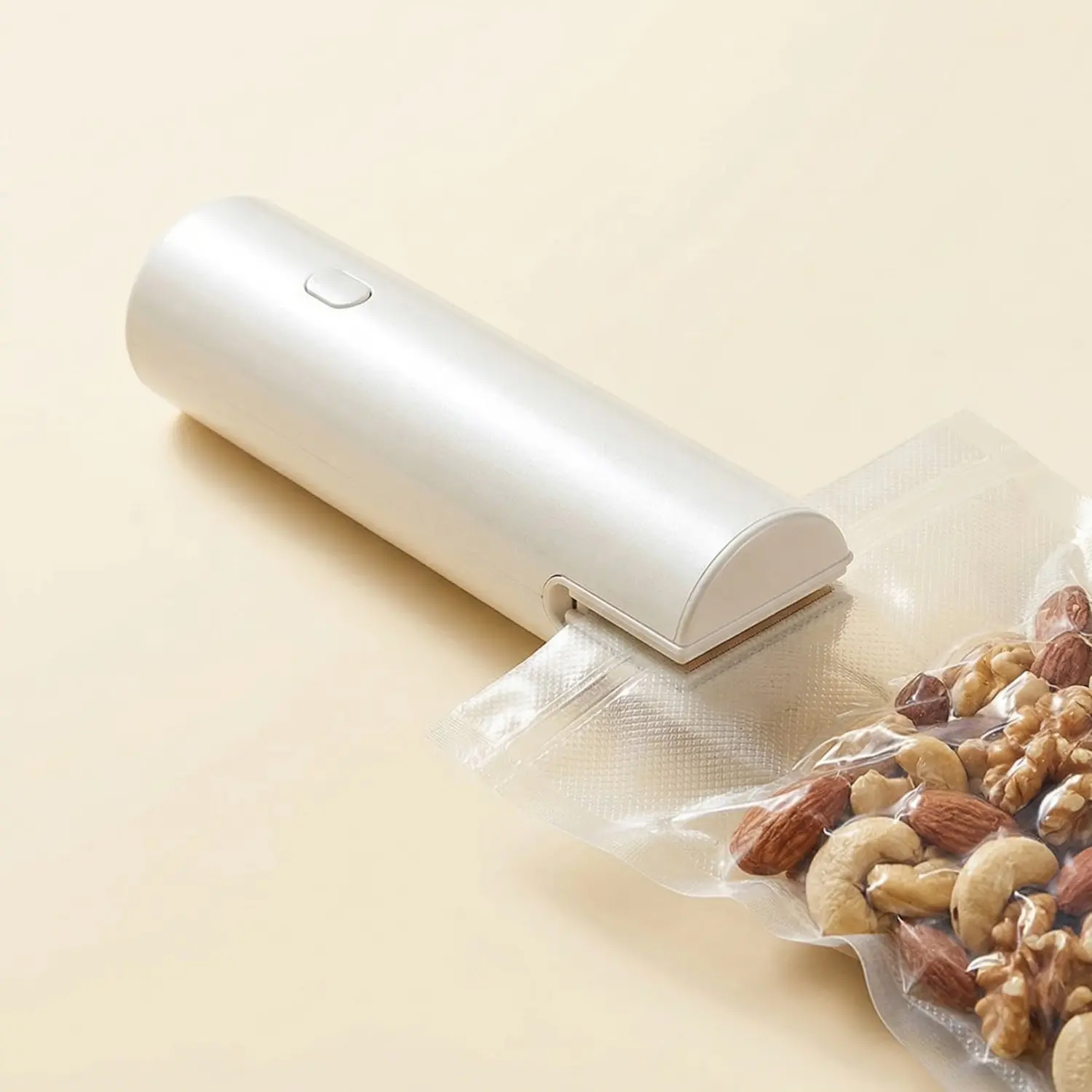
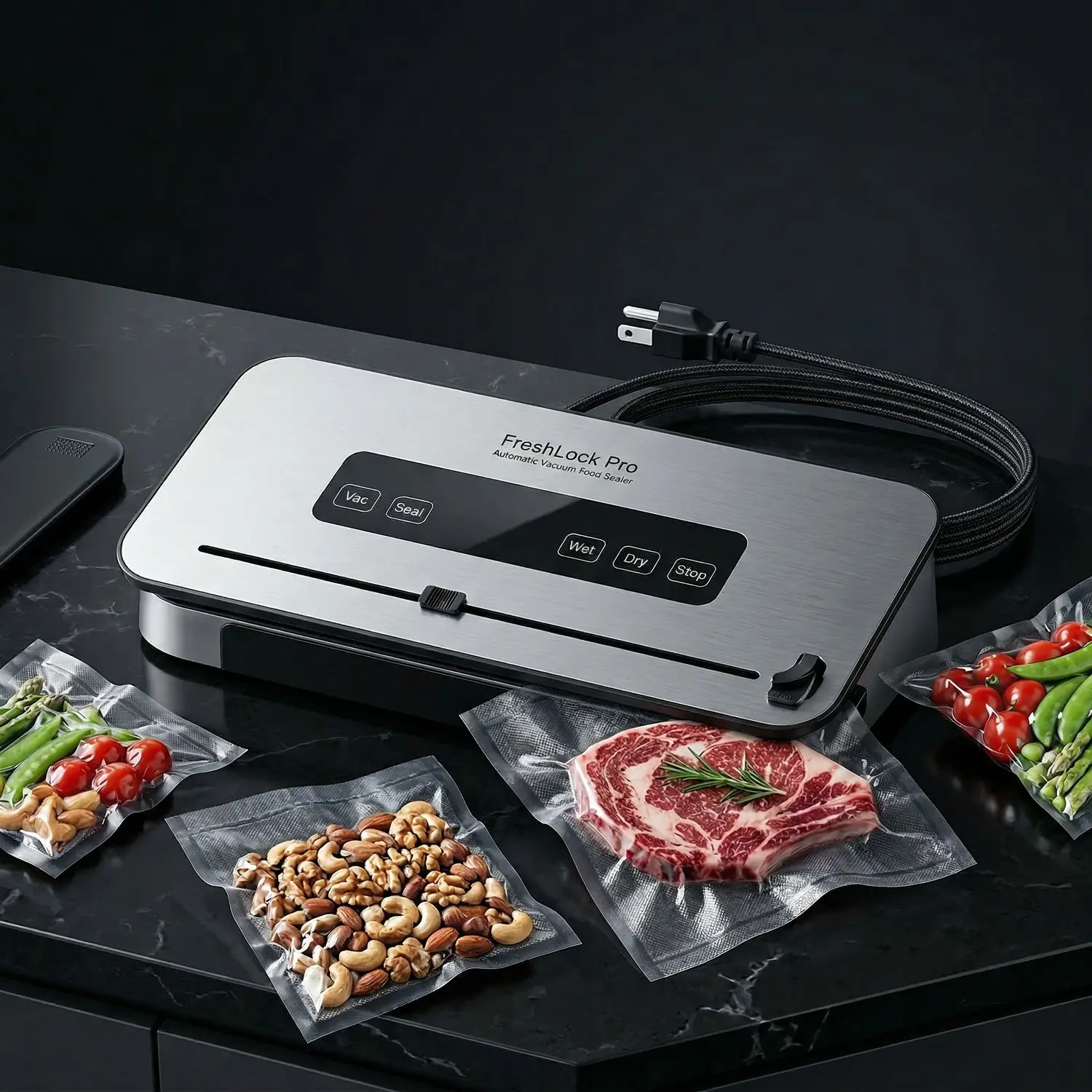
Good Housekeeping’s February 2026 vacuum sealer roundup summarised the science clearly: “Vacuum sealers remove air from a plastic bag or container filled with food before sealing it. This keeps your food fresher for longer by creating an environment that makes it difficult for some bacteria to thrive.”
The “seal, store, organise” method is a simple three-phase kitchen system that addresses the three root causes of food waste identified above:
Phase 1: Seal
Remove air from anything that will be stored more than 48 hours. Vacuum sealing extends typical refrigerator shelf life by 3–5x and freezer life by up to 2–3 years versus standard bags. For everyday use, a handheld mini sealer handles most tasks in seconds. For batch cooking and bulk purchases, a countertop vacuum sealer is worth the slightly higher investment.
Phase 2: Store Smart
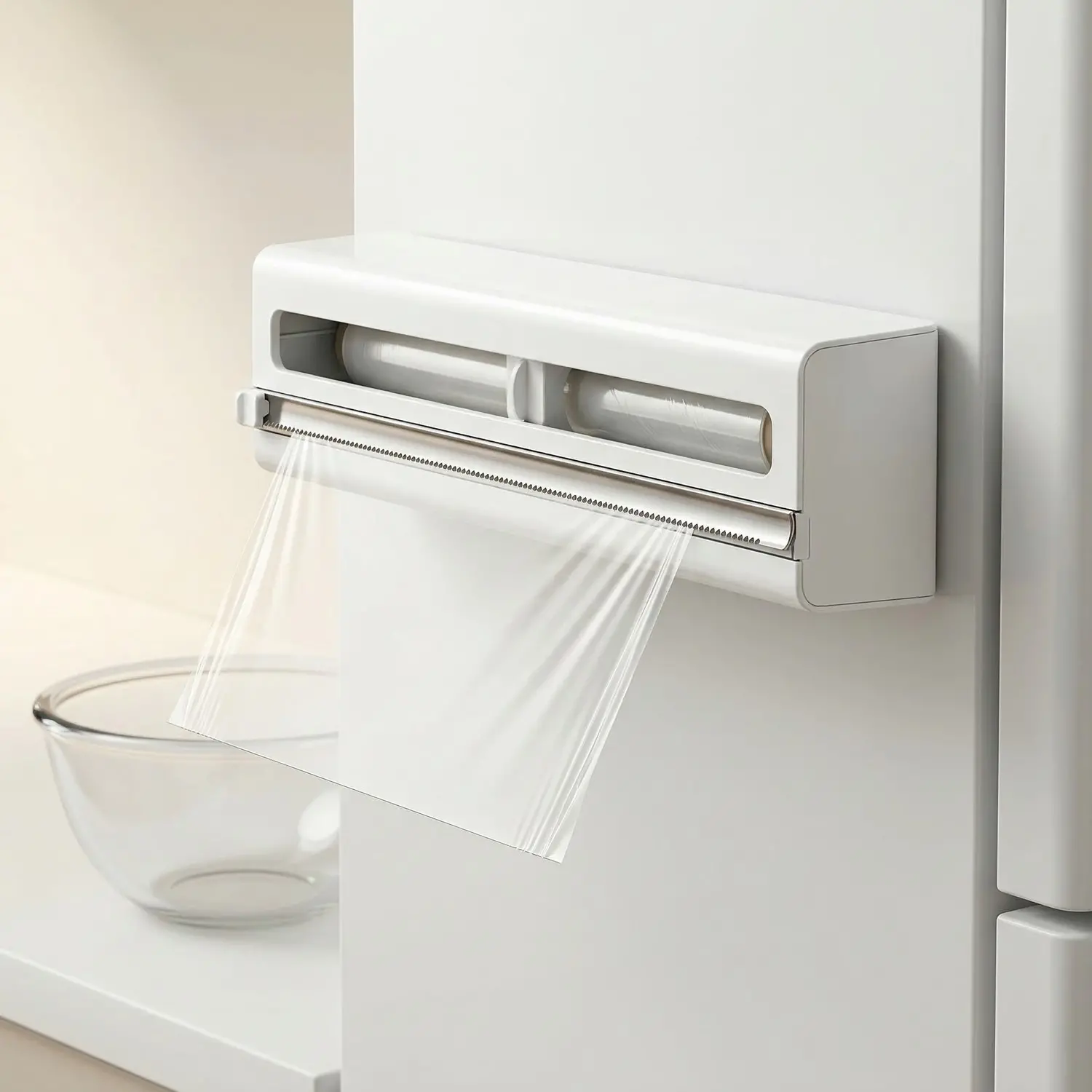
Consistent placement matters more than labelling. Assign fixed zones in your fridge and pantry — proteins on one shelf, produce in one drawer, dairy in one area — and never deviate. Once placement is automatic, you stop “forgetting” food because you always know exactly where to look. The cling film cutter replaces the struggle of tangled wrap and speeds up daily food covering significantly.
Phase 3: Organise the Tools, Not Just the Food
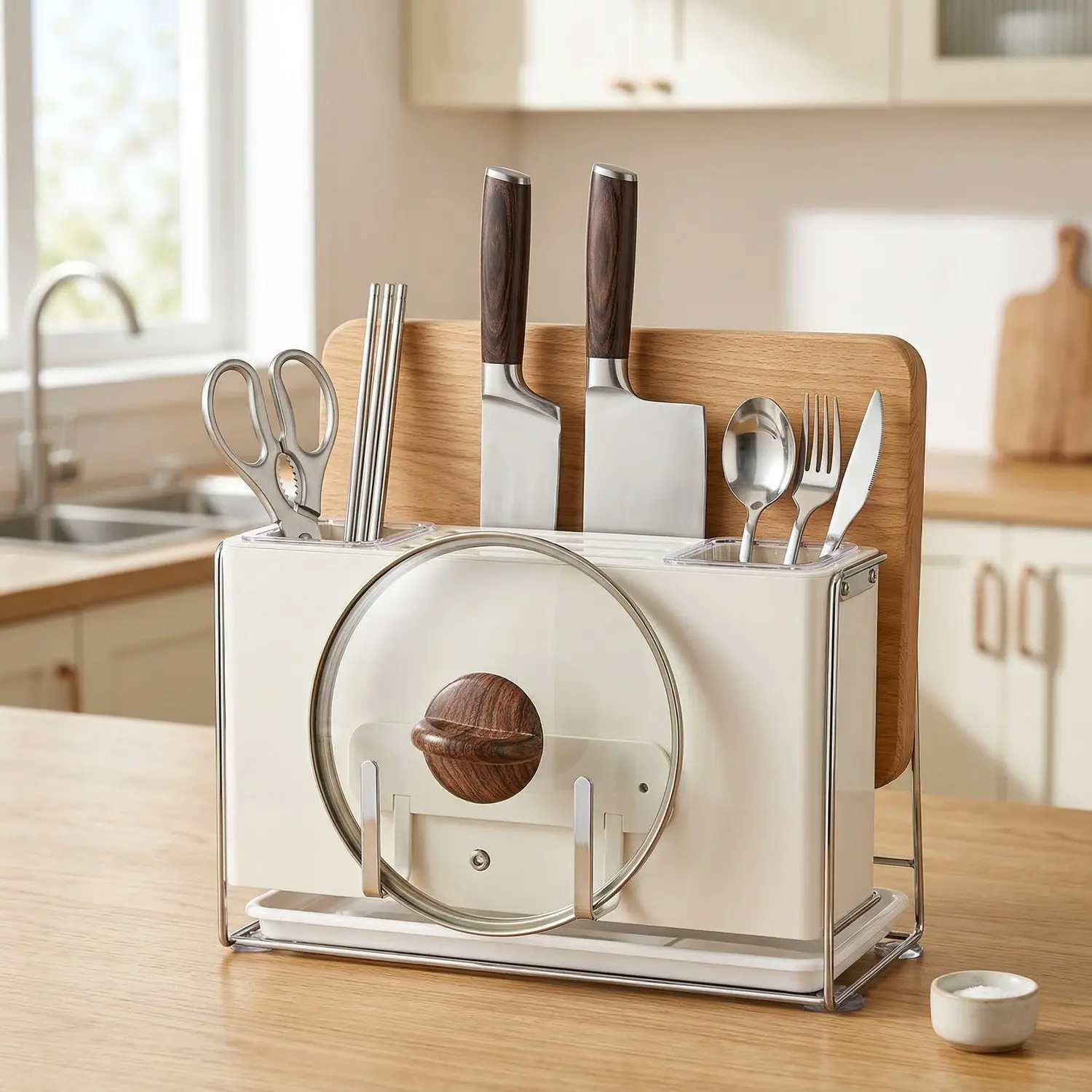
A magnetic knife rack frees up drawer and counter space while keeping knives accessible and sharp. A wall-mounted spice or utensil system means you stop buying duplicates of things you already own but can’t find. Organised tools lead to more cooking. More cooking leads to less takeout and less wasted groceries.
💰 Quick win estimate: Proper sealing typically reduces fresh produce spoilage by 30–50%. For a household spending $200/month on groceries, that’s potentially $30–50 saved per month — or $360–$600 per year — from one simple system change.
The Tools That Make This System Work
Four practical kitchen tools that cover the seal, store, and organise phases — no drill required, no markup.
Frequently Asked Questions
How much food does the average American household actually waste per year?
According to the RTS Food Waste in America 2026 report, the average family of four throws away approximately $1,600 worth of produce annually. When you include dairy, meat, and packaged goods, Feeding America estimates total household food waste value exceeds $408 billion across the US — with 43% of that originating at the household level, making homes the single largest source of food waste.
Is the “best by” date on food packaging a safety deadline?
In most cases, no. According to RTS and Harvard Food Law & Policy Clinic research, more than 80% of Americans discard food that is still safe to eat because of expiration label confusion. “Best If Used By” describes optimal quality, not safety. The only label with a genuine food-safety implication is “Use By,” which applies to a small subset of highly perishable products. Most food discarded based on a “best by” date is perfectly safe to consume.
Does vacuum sealing really make a significant difference to shelf life?
Yes — significantly. Good Housekeeping’s February 2026 vacuum sealer review confirms that removing oxygen extends shelf life by dramatically reducing the bacterial and oxidation processes that cause spoilage. In practical terms: vacuum-sealed produce lasts 3–5x longer in the fridge than in a standard bag, and vacuum-sealed meat can last 2–3 years in the freezer versus 6–12 months in a regular bag.
What’s the single easiest change to reduce kitchen food waste?
Professional organisers consistently point to visibility as the highest-leverage change. If you can see your food, you use it. Switching to clear containers, reorganising the fridge so older items are at the front (FIFO — First In, First Out), and removing produce from opaque packaging are all zero-cost changes that most people report making a noticeable difference within the first week.
How do I start reducing food waste without overhauling my whole kitchen?
Start with one habit: the weekly “Use It Up” night. Pick one evening — Thursday works well for most schedules — and cook only from what’s already in your fridge and pantry. No new shopping. This single habit, done consistently, is cited by multiple professional organisers as the most reliable entry point for reducing both food waste and grocery spending. Once that habit is established, adding a sealer or reorganising storage becomes a natural next step.
The Bottom Line
Food waste in America is a systems problem, not a willpower problem. The $1,600 the average family throws away isn’t the result of carelessness — it’s the result of a kitchen that isn’t set up to preserve, display, and use food before it spoils.
🏡 Where to Start This Week
Pick one change from this list and apply it consistently for two weeks before adding another. The FIFO fridge rule costs nothing. The “Use It Up” Thursday costs nothing. A vacuum sealer or cling film cutter is a one-time $14–$23 investment that pays back in weeks. Small, systematic changes compound into real savings.
Less Waste. More Kitchen.
Simple tools for smarter food storage — from vacuum sealers to magnetic organisers. No clutter, no markup.


About author