No products in the cart.
Why 2026 Is the Year Smart Home Gadgets Finally Made Sense (and Which Ones Actually Do)

Industry Analysis
Why 2026 Is the Year Smart Home Gadgets Finally Made Sense (and Which Ones Actually Do)
Market data, honest analysis, and a no-BS guide to what’s worth buying — by Marcus Cole
Smart home technology has been “almost there” for the better part of a decade. Every year a new wave of press releases, Kickstarter campaigns, and CES booths promised that this — this — would be the year your house got smarter. And every year, most people went home, looked at their incompatible hubs, overpriced sensors, and confusing apps, and quietly gave up. According to Statista’s Smart Home market data, the global smart home market is projected to surpass $170 billion by 2025, driven by falling hardware costs, improved interoperability, and growing consumer familiarity with connected devices.
2026 is different. Not because the gadgets suddenly got cooler — some of them have been around for years in slightly worse forms. It’s different because the market math finally changed, the standards war quietly ended, and the hardware crossed a price threshold that converts “curious early adopters” into “everyone’s mum.” The numbers back this up in a way they didn’t before.
This isn’t hype — it’s pattern recognition. And if you know what you’re looking at, there are a handful of smart home gadgets right now that genuinely justify the spend. Let’s go through the data, then the reality.
“The smart home market is no longer a niche for enthusiasts. The rollout of Matter — a universal IoT standard backed by Amazon, Apple, Google, and others — is rapidly eliminating the fragmentation barrier that held back mass adoption for years.”
— IoT Breakthrough, Smart Home Market Analysis, 2026
— IoT Breakthrough, Smart Home Market Analysis, 2026
📋 In This Article
The Numbers That Show Something Has Changed
Let’s start with the market data, because the scale of what’s happening here is easy to underestimate if you’re not watching it closely.
According to Fortune Business Insights, the global smart home market was valued at $147.52 billion in 2025 and is projected to reach $180.12 billion in 2026 — growing at a CAGR of 21.40% through 2034. That kind of growth curve doesn’t happen in a market where consumers are still confused and frustrated. It happens when things start working.
Statista puts global smart home revenue at $193.5 billion in 2026, with continued annual growth of approximately 9% through 2029. Meanwhile, IoT Analytics reported that the number of connected IoT devices reached 18.5 billion in 2024 and is expected to hit 21.1 billion by end of 2025 — a 14% year-over-year jump — on a trajectory toward 39 billion by 2030.
$180B+
Global smart home market value in 2026 (Fortune Business Insights)
Global smart home market value in 2026 (Fortune Business Insights)
21.1B
Connected IoT devices worldwide by end of 2025 (IoT Analytics)
Connected IoT devices worldwide by end of 2025 (IoT Analytics)
21.4%
Projected CAGR of smart home market, 2026–2034 (Fortune Business Insights)
Projected CAGR of smart home market, 2026–2034 (Fortune Business Insights)
📊 Sources: Fortune Business Insights Smart Home Report (updated March 2026) · IoT Analytics Connected Device Tracker (Oct 2025) · Statista Smart Home Market Forecast 2026
North America continues to dominate with a 31.70% market share in 2025, and the US market alone is projected to reach $35.28 billion by 2026 (Fortune Business Insights). That’s not a niche market. That’s a mainstream category making serious money — which means manufacturers are now competing hard on price and reliability rather than just novelty.
What Changed in 2026 Specifically
Big market numbers are one thing. What actually shifted in the day-to-day experience of buying and living with smart home gadgets? A few things happened more or less simultaneously.
The Matter standard finally matured. Matter — the universal IoT interoperability standard developed by Amazon, Apple, Google, Samsung, and dozens of others — spent 2023 and 2024 in awkward adolescence. By 2026, device support has meaningfully expanded, and the promise of “buy any device, it works with any ecosystem” is now close enough to reality that it removes the single biggest friction point for new buyers. You no longer need to research which hub talks to which app before buying a smart plug.
Entry price points collapsed. Three years ago, a competent smart home device started at $40–60. Today, genuinely useful connected hardware starts well below that. The price compression mirrors what happened with Bluetooth earbuds around 2020 — once the BOM cost drops below a threshold, adoption accelerates fast.
AI integration moved from gimmick to function. Smart thermostats, lighting systems, and even plant monitors now use on-device or cloud AI to adapt to user behavior without requiring manual configuration. Ecobee’s weather-aware comfort adjustments, Roomba’s obstacle recognition, energy-aware plugs that learn usage patterns — these are solving real problems, not just adding a “smart” label to a dumb device.
The energy cost argument landed. With electricity costs remaining elevated, smart energy management hardware — thermostats, intelligent plugs, grid-aware appliances — now pays for itself in months rather than years. According to IoT Breakthrough’s 2026 analysis, the energy management segment of smart home revenue is on track to reach approximately $17.5 billion by 2027, driven precisely by ROI-conscious consumers.

The 4 Gadget Categories Worth Paying Attention To
Not all smart home categories matured equally. Here are the four that are producing genuine value in 2026 — and why they’re worth your attention (and money).
1. Smart Planters and Home Automation
The most interesting development in the small-device smart home space is the rise of genuinely useful ambient automation — devices that run quietly in the background and solve a concrete problem you actually have. Smart planters are a perfect example: they remove the guesswork from plant care, monitor soil moisture, temperature, and light, and increasingly give visual or app-based feedback that prevents the slow death of your houseplants. This category also includes smart clocks, home sensors, and ambient display devices — objects that blend into your environment and deliver useful information without requiring active engagement.
2. Portable Power and Charging
Multi-device charging has become a genuine friction point in modern homes and workspaces. The rise of USB-C universality and magnetic charging standards has enabled a wave of clever, compact charging accessories that are actually worth buying. Magnetic swivel cables that function as both a fast charger and a phone stand, compact multi-port GaN chargers, and portable power banks with wireless output — this category is delivering high utility per dollar in a way that “smart” speakers and hubs never really did.
3. Desk and Productivity Tools
With remote and hybrid work firmly entrenched, the personal workspace has become a serious investment category. Smart desk gadgets — from personal cooling devices that use thermoelectric technology to ambient sensors and ergonomic peripherals — are selling because they solve problems people encounter every single day. The personal micro-environment is now a design problem, and the products being built to solve it are genuinely thoughtful.
4. Small-Space Smart Solutions
Apartment living and smaller footprints have driven a wave of compact, purpose-built smart devices that don’t require a large home to justify. Small-space air quality monitors, compact smart lighting, plug-in automation modules, and personal climate devices have found a massive and underserved audience. The key here is proportionality: these devices solve the exact same problems as enterprise smart home systems, at a fraction of the cost and complexity.
The Ones That Are Still Overhyped
Being honest about what doesn’t work is more useful than another breathless “top picks” list. Here’s what Marcus Cole would still skip in 2026.
Voice-first smart displays. The pitch was always compelling: a screen on your counter that answers questions, controls your devices, and shows you recipes while you cook. The reality is a device that mishears commands, shows unsolicited ads, and gradually loses support as the platform pivots. The category hasn’t found its identity, and until it does, it’s an expensive dust collector.
Smart appliance upgrades for older homes. “Smart” refrigerators, ovens, and washing machines sound compelling until you realize they require dedicated electrical work, specific Wi-Fi configurations, and apps that get abandoned within two firmware cycles. The ROI math doesn’t work unless you’re already buying new appliances anyway.
Subscription-gated security cameras. Hardware that stops functioning properly without a paid cloud plan deserves skepticism. The market is crowded with cameras that capture decent footage locally but lock cloud storage, AI alerts, and facial recognition behind monthly fees. You’re not buying a product — you’re renting a feature set.
Overcomplicated smart lighting ecosystems. Spending $300+ to automate your lights so they turn on when you walk into a room is a solution in search of a problem. The entry-level smart bulb market is fine. The full ecosystem play — hubs, bridges, color-changing cans, scene controllers — adds complexity that rarely delivers proportional value.
Products Marcus Actually Recommends
These aren’t gifted or sponsored. They’re picked because they represent the clearest value-per-dollar proposition in their category right now.
01
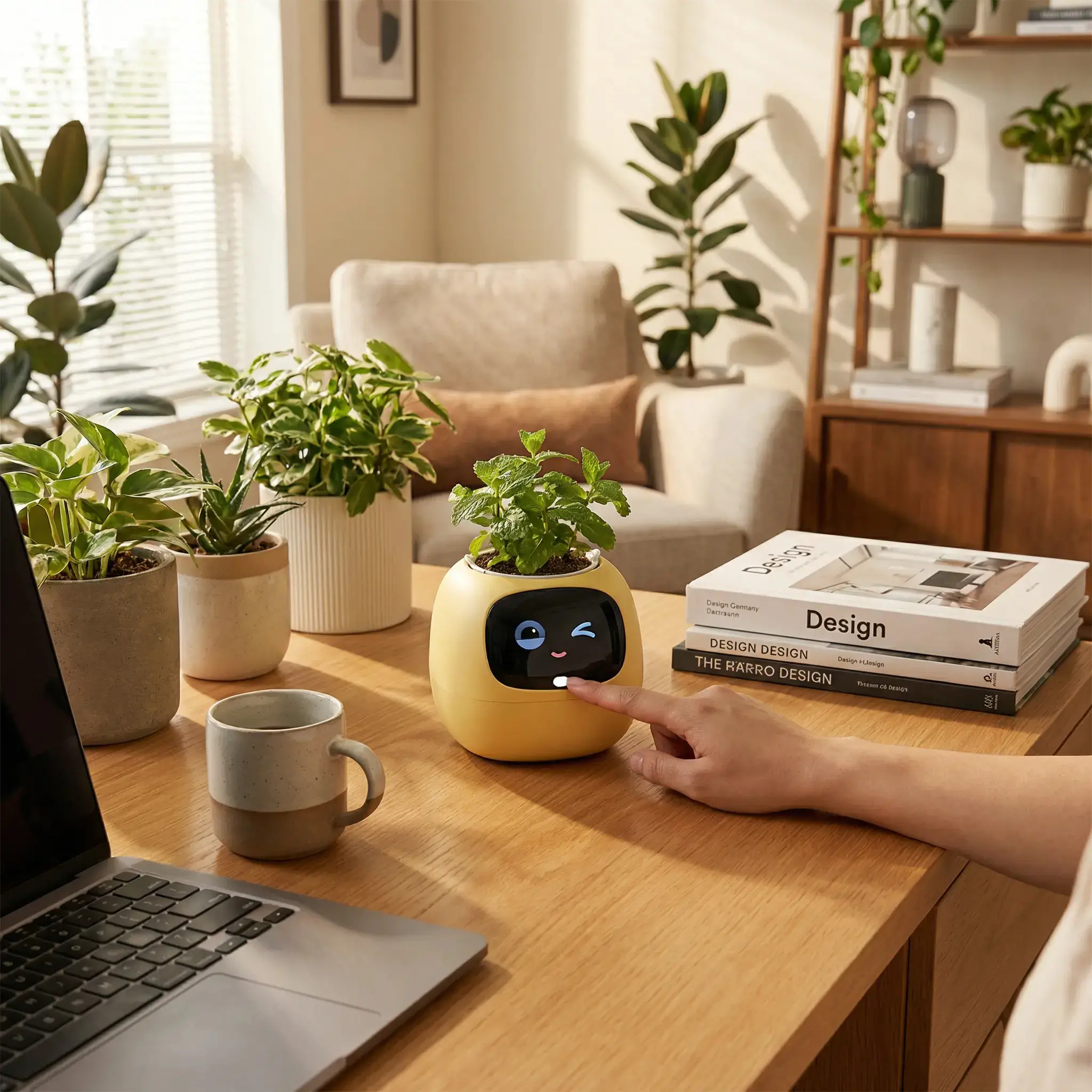
Smart Home Automation
Ivy: The AI Smart Planter That Turns Your Plant Into a Pet
$79.99
Ivy sits at the intersection of ambient smart home tech and genuinely clever hardware. It monitors soil moisture, light, and temperature via built-in sensors, self-waters for up to 10 days via a 120ml tank, and communicates plant needs through 70+ animated expressions on an IPS LCD screen. It syncs with Alexa, Google, and a dedicated app via Wi-Fi and Bluetooth. It’s also just fun to have on a desk — which is more than most smart home gadgets can claim. At $79.99, it’s priced below the threshold where smart home hardware becomes a hard sell.
02
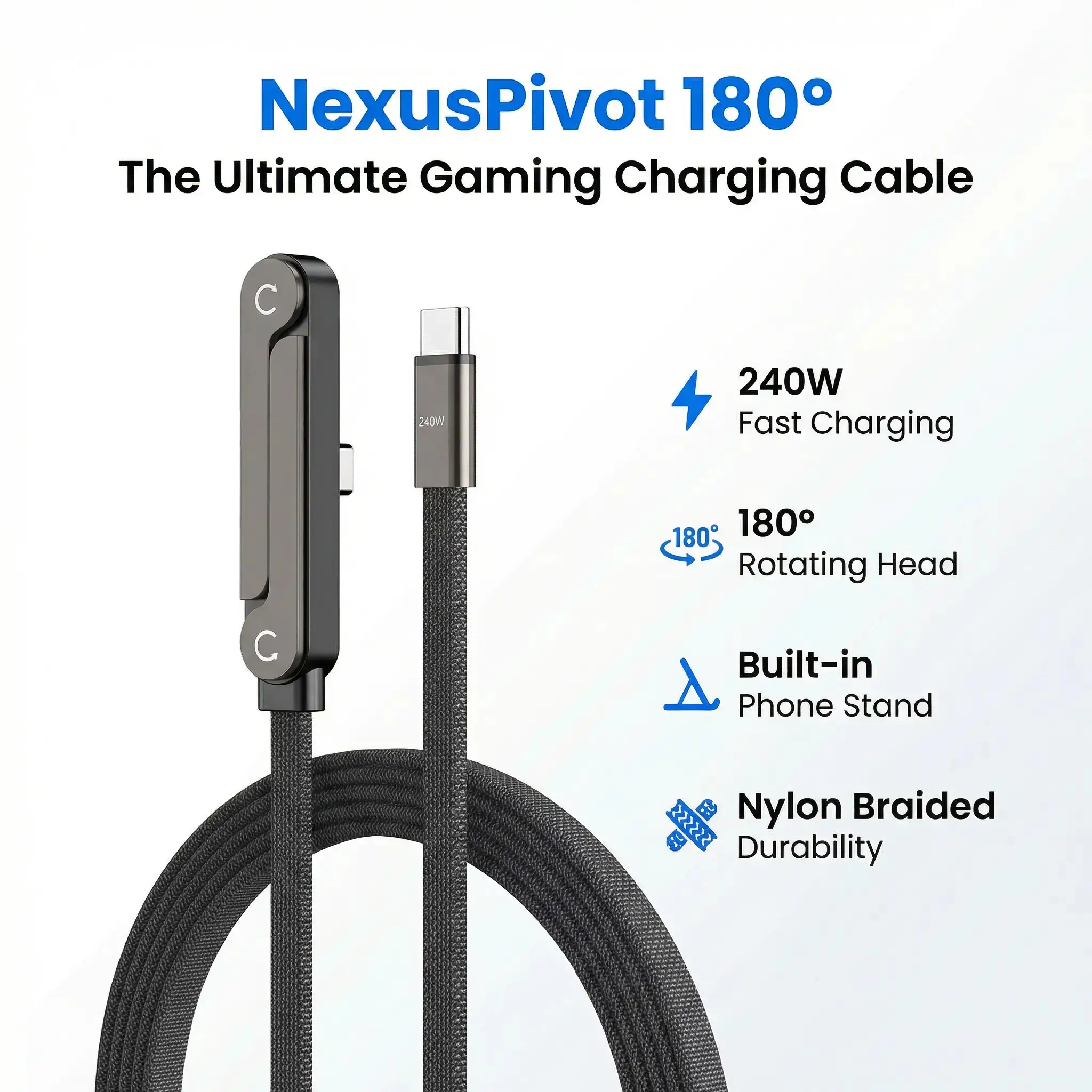
Portable Power
NexusPivot 180°: 2-in-1 Gaming Charging Cable & Phone Stand
$9.99
At $9.99, this is one of the sharpest value propositions in the portable charging category. The 180° swivel head solves a real problem for anyone who uses their phone while charging — it keeps your grip unobstructed whether you’re gaming, scrolling, or taking a call. The built-in kickstand adds hands-free viewing without any extra hardware. Supports USB-C, Lightning, and Micro-USB with 2.4–3A fast charging. Tangle-free nylon braid construction. This is what the cable category should look like.
03

Desk & Productivity
ArcticBreeze Pro Semiconductor Cooling Handheld Fan
$14.99
Most desk fans move warm air around. The ArcticBreeze Pro uses a TEC Peltier thermoelectric module to actively chill the airflow below ambient temperature — which is a meaningful distinction on a hot afternoon. 100 individually adjustable speeds via a brushless motor, a digital display showing temperature and battery level, and 6–8 hours of runtime from a 2000–4000mAh built-in battery. At 167g and 17cm, it genuinely fits in a bag. For $14.99, the spec sheet doesn’t make sense — in a good way.

What to Watch in the Next 12 Months
The smart home category is moving fast enough that what you buy today could look very different in 18 months. Here’s where the interesting developments are heading:
- Matter 2.0 and expanded device categories. The next iteration of the Matter standard is expected to cover more device types — cameras, energy monitors, and HVAC systems — which will dramatically increase the pool of genuinely interoperable hardware. When this lands, the case for ecosystem lock-in collapses almost entirely.
- On-device AI without the subscription. The shift from cloud-dependent AI features (which require ongoing payment) to on-device inference (which works offline and costs nothing beyond the hardware) is accelerating. Devices that can learn user patterns locally, without phoning home, will become a significant selling point — particularly for privacy-conscious buyers.
- IoT device counts approaching 25 billion. IoT Analytics projects continued growth toward 39 billion connected devices by 2030. At that scale, the “smart home” stops being a premium category and becomes a default feature of new construction. The implication: devices that are smart-home-ready out of the box will increasingly be table stakes, not differentiators.
- Personal micro-environment tech gaining traction. The desk fan and personal cooling category — currently still niche — is on a trajectory toward mainstream status as both remote work culture and climate patterns sustain demand for personal thermal management. Expect the category to professionalize rapidly, with better battery life, quieter motors, and more precise temperature control at lower prices.

Frequently Asked Questions
Are smart home gadgets worth buying in 2026?
For the right categories, yes — more than in any previous year. Price compression, the maturation of the Matter interoperability standard, and genuine AI improvements mean that entry-level smart home devices now deliver real value without requiring a significant upfront investment or technical expertise. The key is to focus on single-purpose devices that solve a specific problem, rather than whole-ecosystem plays that require ongoing commitment.
What is the Matter standard and why does it matter for buyers?
Matter is a universal IoT connectivity standard developed by Amazon, Apple, Google, Samsung, and dozens of hardware manufacturers. Its purpose is to ensure that smart home devices from different brands can talk to each other without proprietary hubs or ecosystem lock-in. For buyers, it means you no longer need to buy all your smart home hardware from a single brand to have it work together. As of 2026, Matter support has expanded significantly and is now a meaningful factor when evaluating smart home purchases.
How much should I spend on a smart home gadget to get real value?
The sweet spot in 2026 is roughly $10–$80 for most single-purpose smart home devices. Below $10, quality control tends to be inconsistent. Above $80, you’re into territory where the device needs to solve a genuinely significant problem to justify the spend. Avoid anything that locks useful features behind a monthly subscription — the ongoing cost frequently exceeds the hardware value within 12–18 months.
What smart home gadgets should I avoid in 2026?
The categories with the weakest value proposition right now are voice-first smart displays (confusing UX, frequent platform pivots), subscription-gated security cameras (ongoing cost for features that should be standard), and complex smart lighting ecosystems (high cost, marginal benefit over simple on/off automation). Smart appliance upgrades for older homes also tend to disappoint — the compatibility requirements are significant and the ROI rarely materializes as promised.
See All Tech & Gadgets
Browse the full range of smart home gadgets, desk accessories, and consumer tech that actually make a difference.


About author